How I Discovered Left Coast Estate
My sister-in-law Andrea mentioned that she had fond memories of spending time at Left Coast Estate years ago with her sister Nicky. Family-owned and operated? Award-winning wines? A bucolic setting? Sign me up! When I learned about the estate’s focus on restoring natural oak savanna habitat, the rangeland ecology geek in me became even more interested.
Left Coast Estate is located in Rickreall, Oregon, a town I already knew from my years working in the area. Rickreall was home to one of the largest dairy farms in the Willamette Valley, where I worked as a milk tester every month. So, visiting this part of Oregon brought back some familiar connections to the agricultural world.
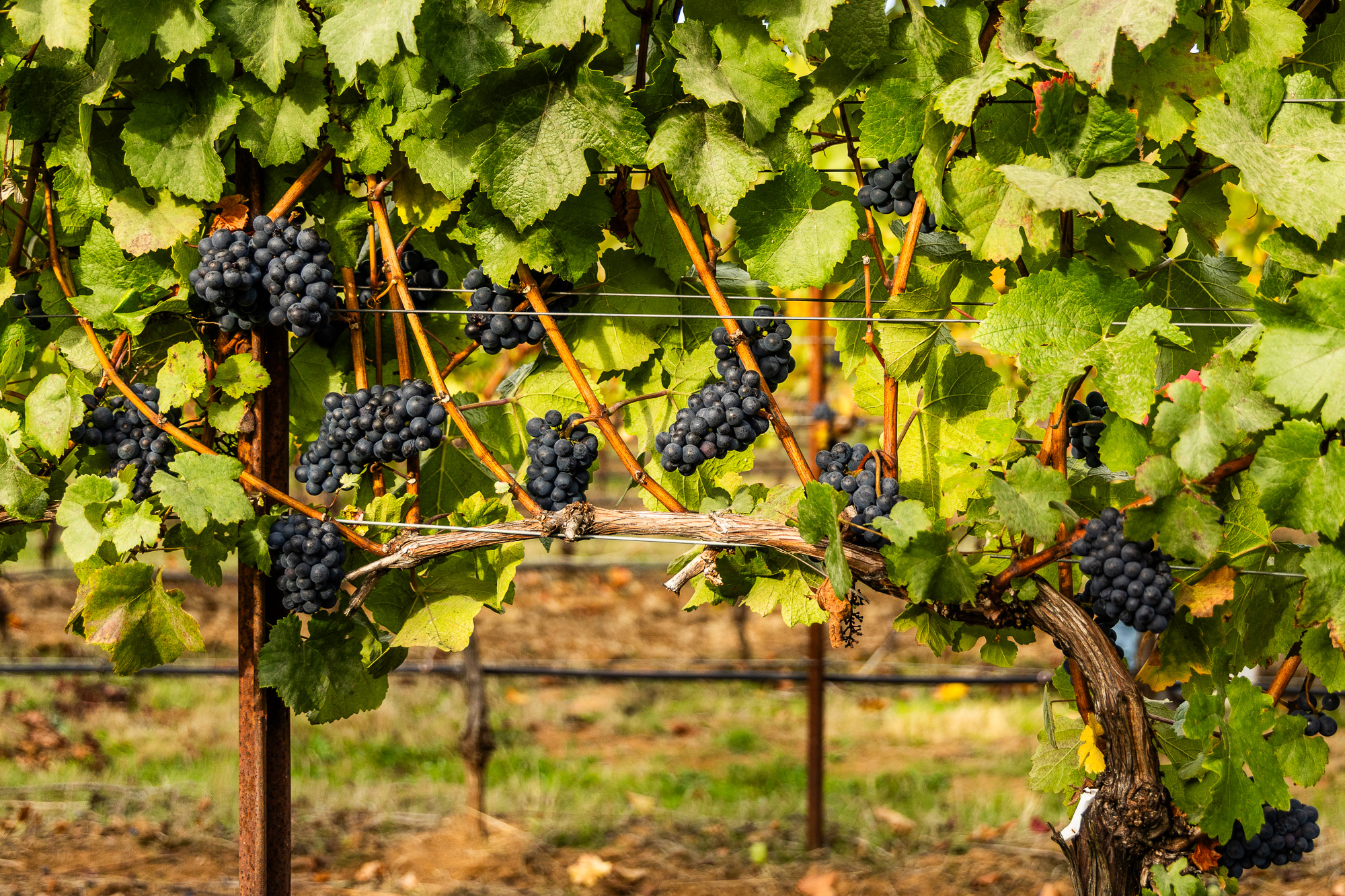
What began as a wine tasting turned into a conversation with our server about the estate and its natural surroundings. Left Coast Estate encompasses 447 acres, with all of its grapes grown on the estate. From the wine tasting, I learned that the vineyards are only part of the story. A conversation with the tasting room manager led to an opportunity to photograph the estate at sunrise on the second day of grape harvest.
Beyond the Vines: A Commitment to Natural Habitat
My experience began as soon as we entered the property. Follow the signs to Left Coast Estate, and along the scenic drive to the tasting room, you’re greeted by signs of nature.
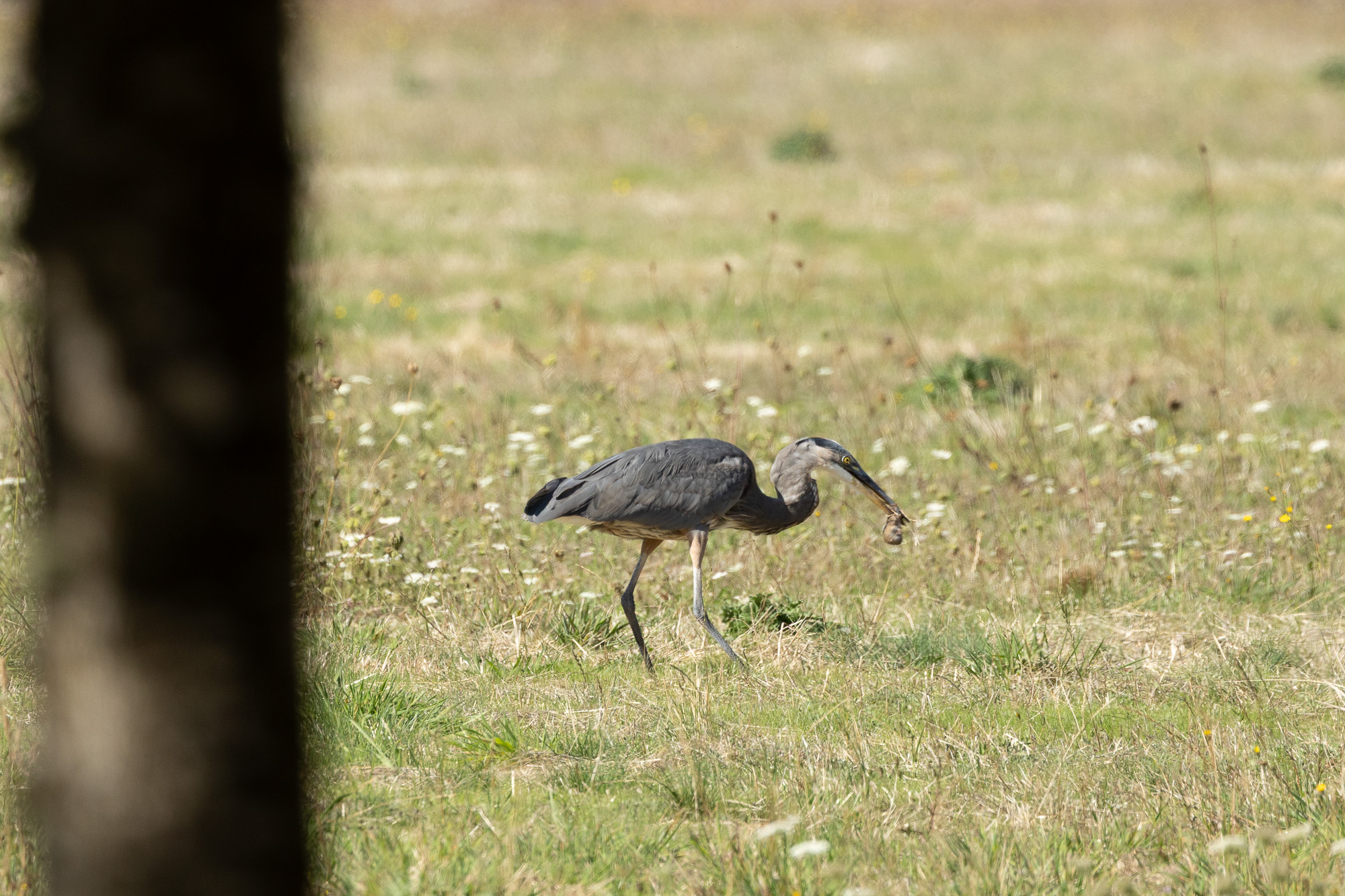
It was almost like a wildlife safari from the start. We drove down a long driveway that winds past a variety of trees, plots of grapevines, and a pond. Beyond the trees in a nearby plot of grassland, we spotted a beautiful blue heron.
After watching him for a few minutes, we were surprised by a sudden move. He snatched up a rodent emerging from the ground—an invasive gopher!
It was a great example of how supporting biodiversity can help create a natural balance. Native grasses promote more moisture-holding soils and prevents erosion. Healthy land supports beneficial wildlife, and wildlife can provide a form of natural pest control. As Left Coast puts it, “healthy land makes better wine.”
The property is also near the Baskett Slough Wildlife refuge, and it is clear that nature is an important part of this winery.
The Tasting Room
Inside the tasting room, we enjoyed warm bread with olive dip while taking in the atmosphere. Nearby guests were enjoying wood-fired pizza, which made the experience even better.
I also tried white Pinot Noir for the first time. Unlike the familiar red version, white Pinot Noir is made by removing the grape skins early in the winemaking process, limiting the color they contribute to the juice.
It was a relaxed visit, with good wine, good food, and plenty to discover beyond the tasting room.
Views Among the Ancient Oaks
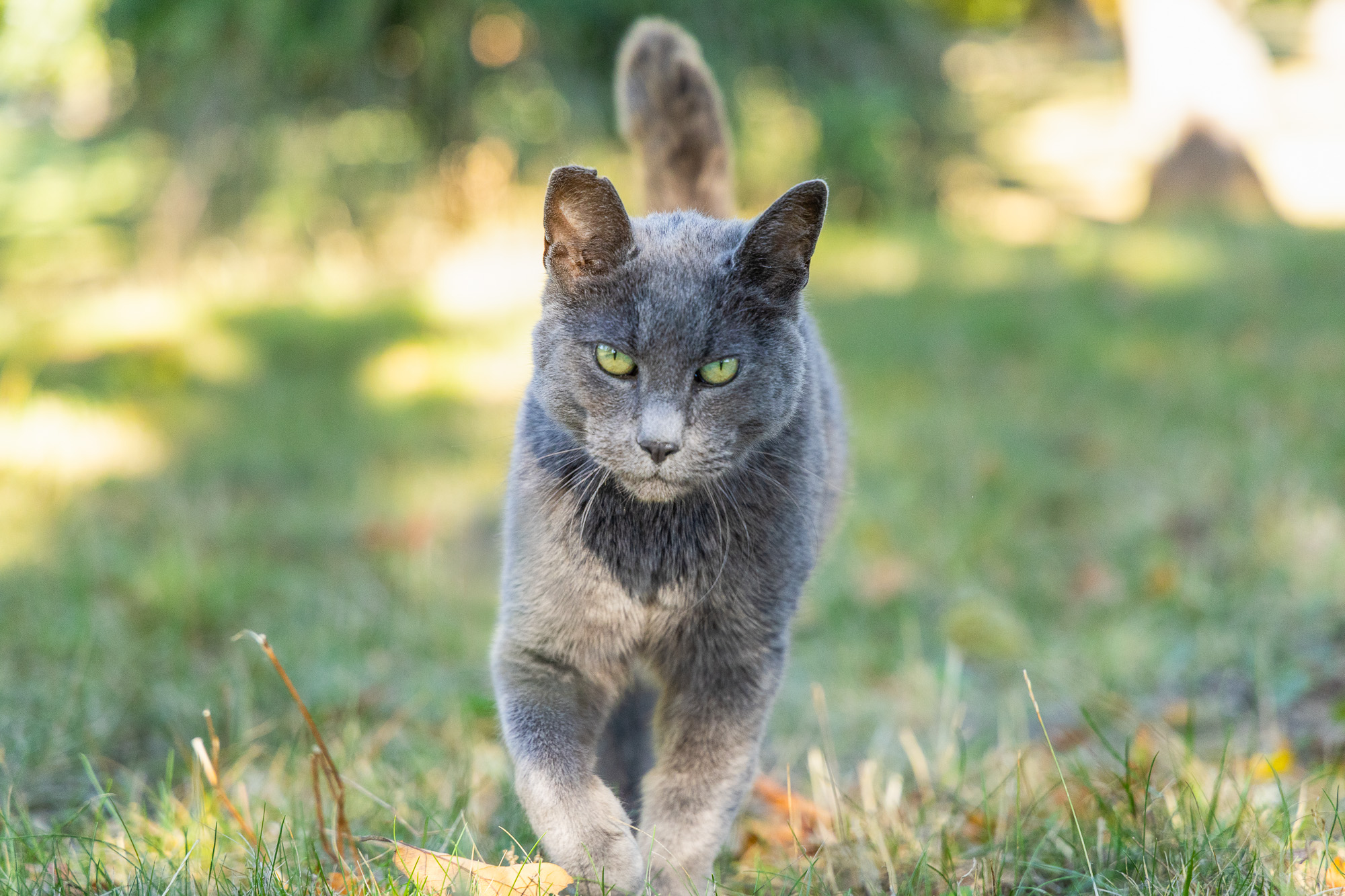
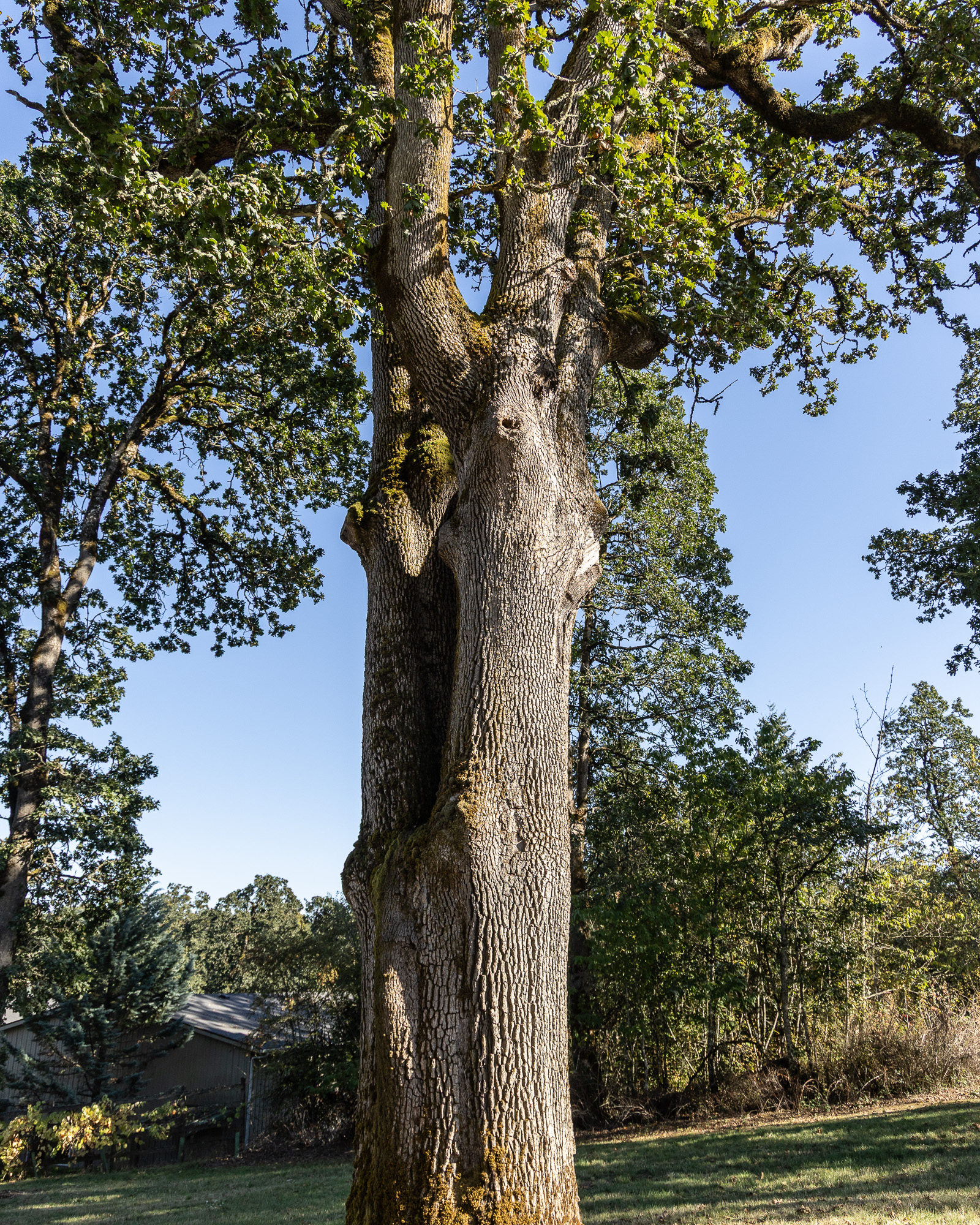
Outside, we admired the views while enjoying the shade of the estate’s ancient white oak trees. Even Jaws, the winery cat, seems to appreciate this part of the property. He wanders among the oaks when he wants a social break from winery visitors!
The massive oaks and distant hills are more than a beautiful backdrop. They’re part of the natural environment that helps define the character of this place and its wines. The land, soil, vegetation, and climate all contribute to the growing conditions of the surrounding vineyards.
It’s an interesting reminder that the landscape isn’t simply something to look at while enjoying a glass of wine. It’s part of the story behind what’s in the glass.
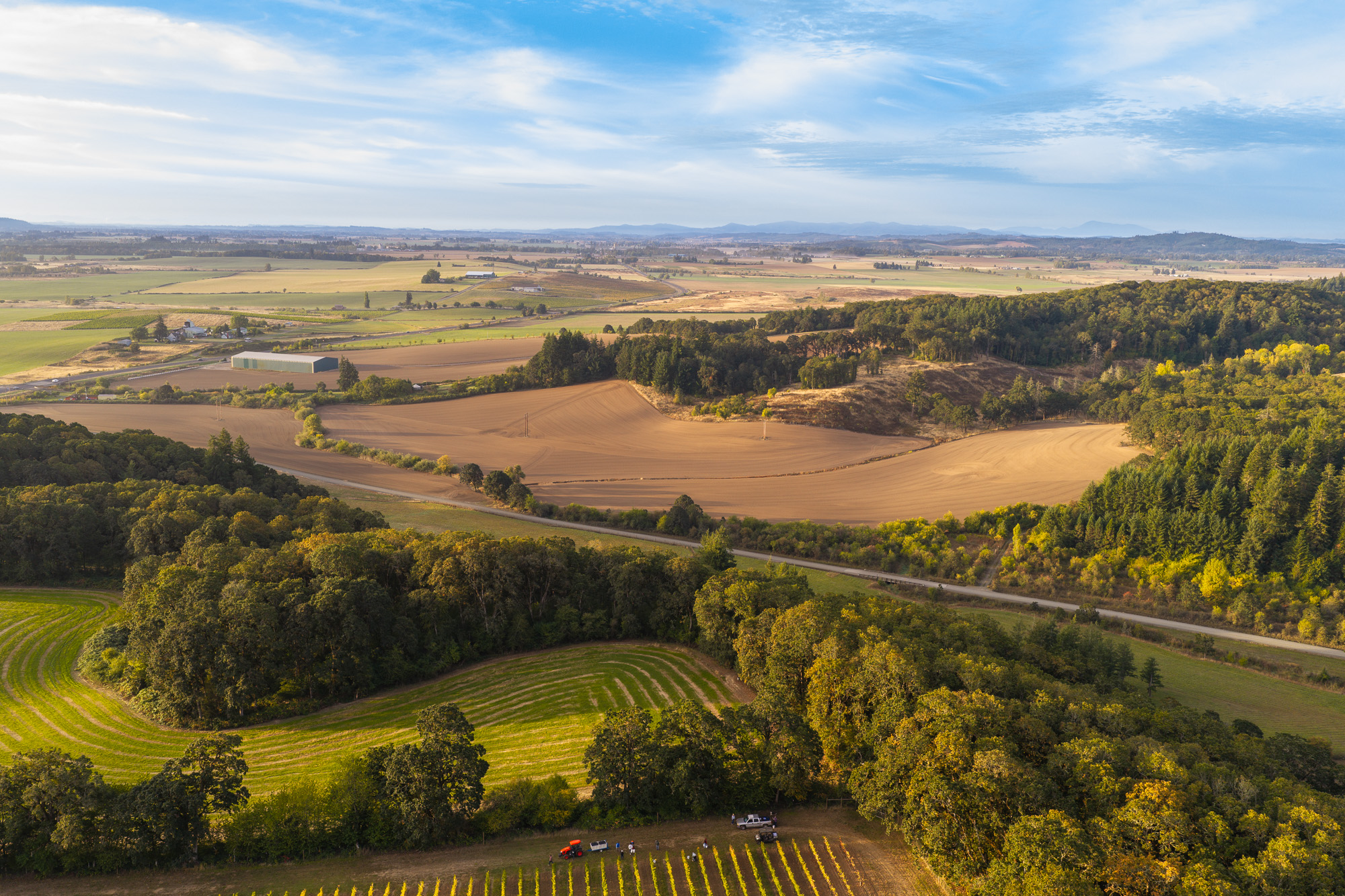
The property includes more than 100 acres of old-growth white oak habitat, with some trees estimated to be around 450 years old. It also contains more than 200 acres of what the estate calls “ecological compensation areas.”
These areas are an important part of the estate’s commitment to restoration, particularly the preservation of the endangered oak savanna ecosystem.
Oak savanna was once a defining part of the Willamette Valley landscape before extensive farming and development changed the region. Today, restoring and maintaining this habitat helps preserve an important part of the valley’s natural history.
What interests me most is the idea of going beyond conservation, but the land restoration can be part of the way a winery approaches its entire operation. The natural environment isn’t separate from the vineyard. The oak savannah contributes to the place where the grapes grow, by providing the ecosystem for the vines, promoting natural diversity, and making a nice, shady experience for wine tasting!
A Sunrise Shoot During Harvest
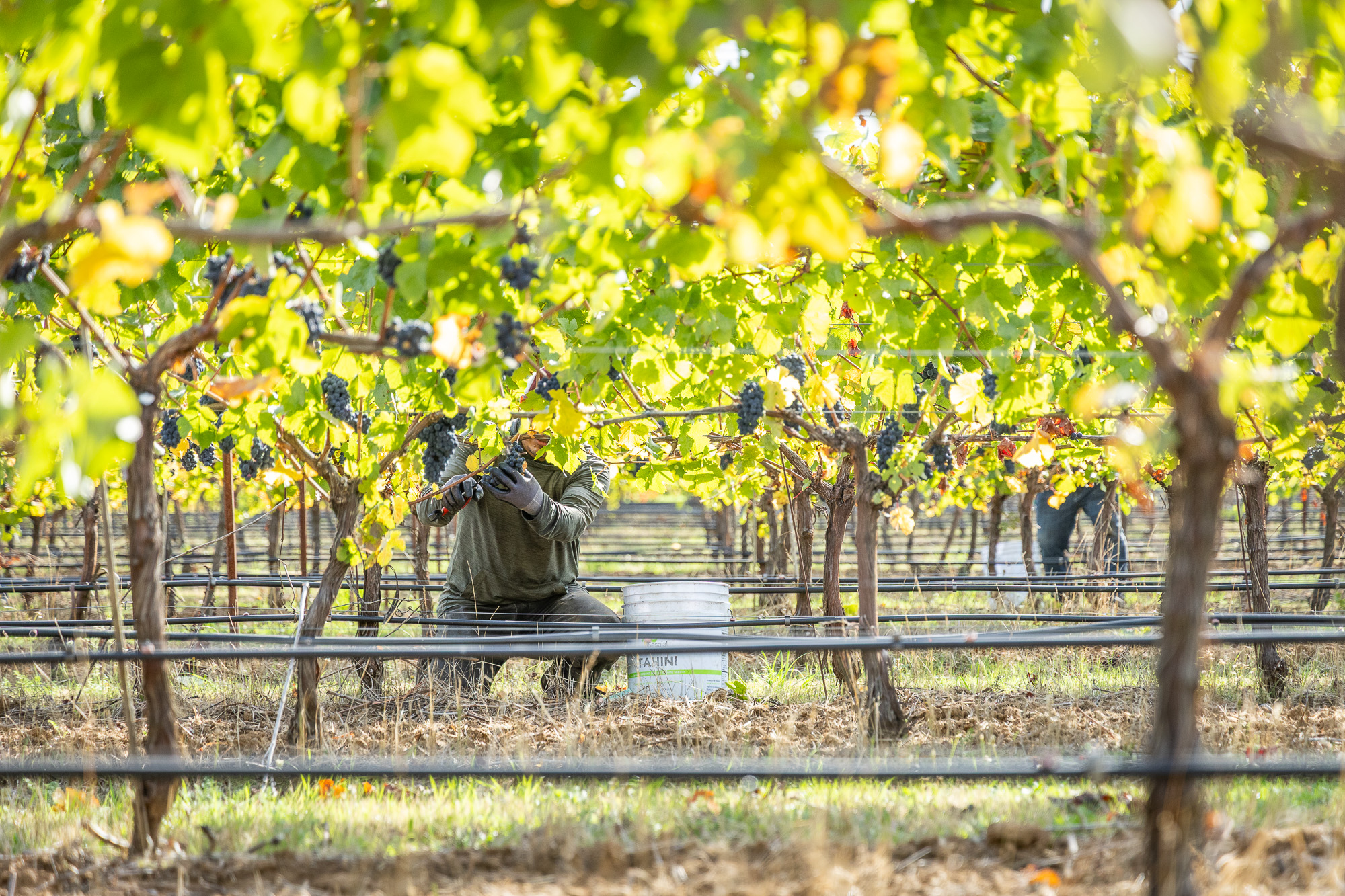
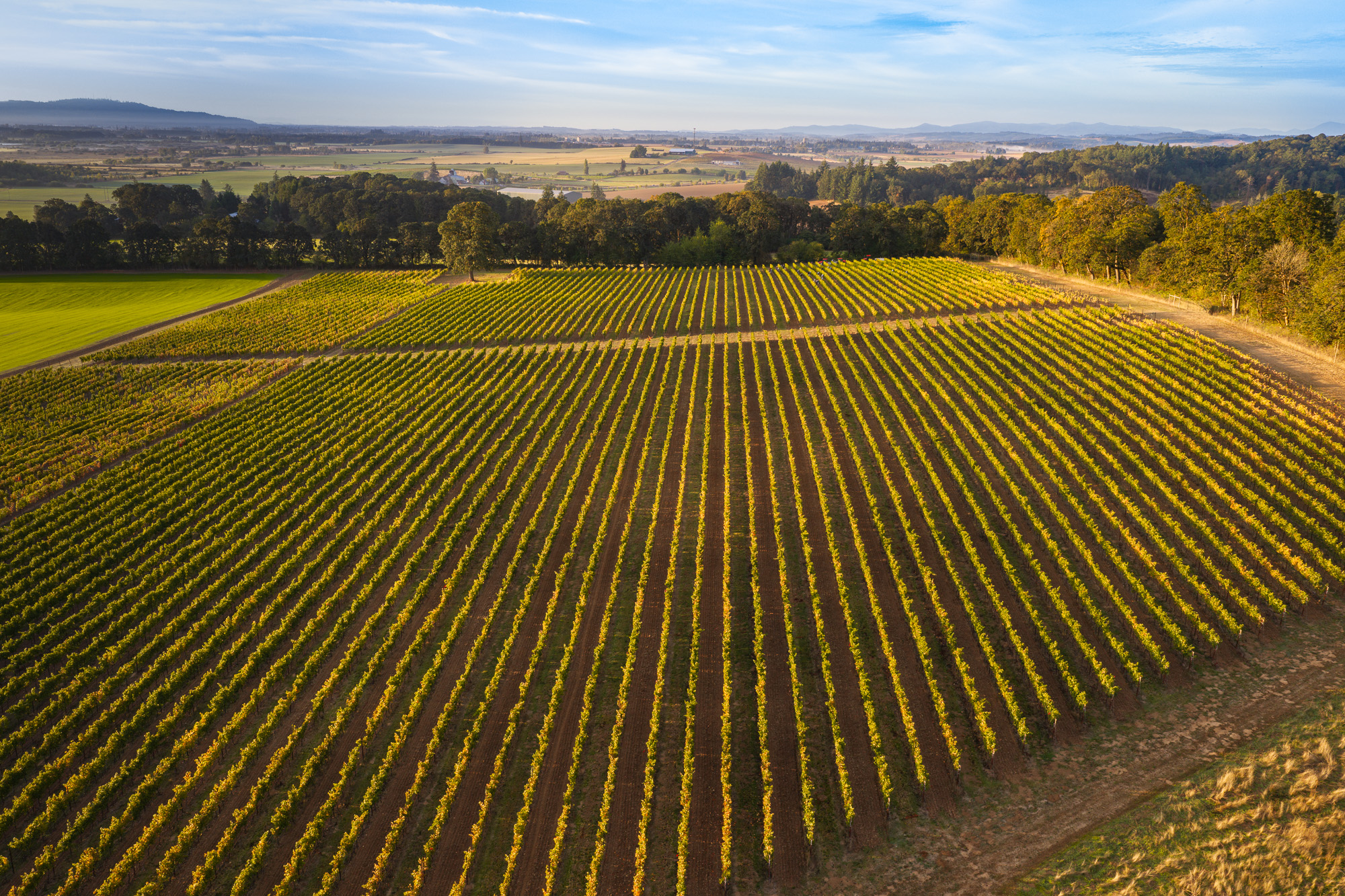
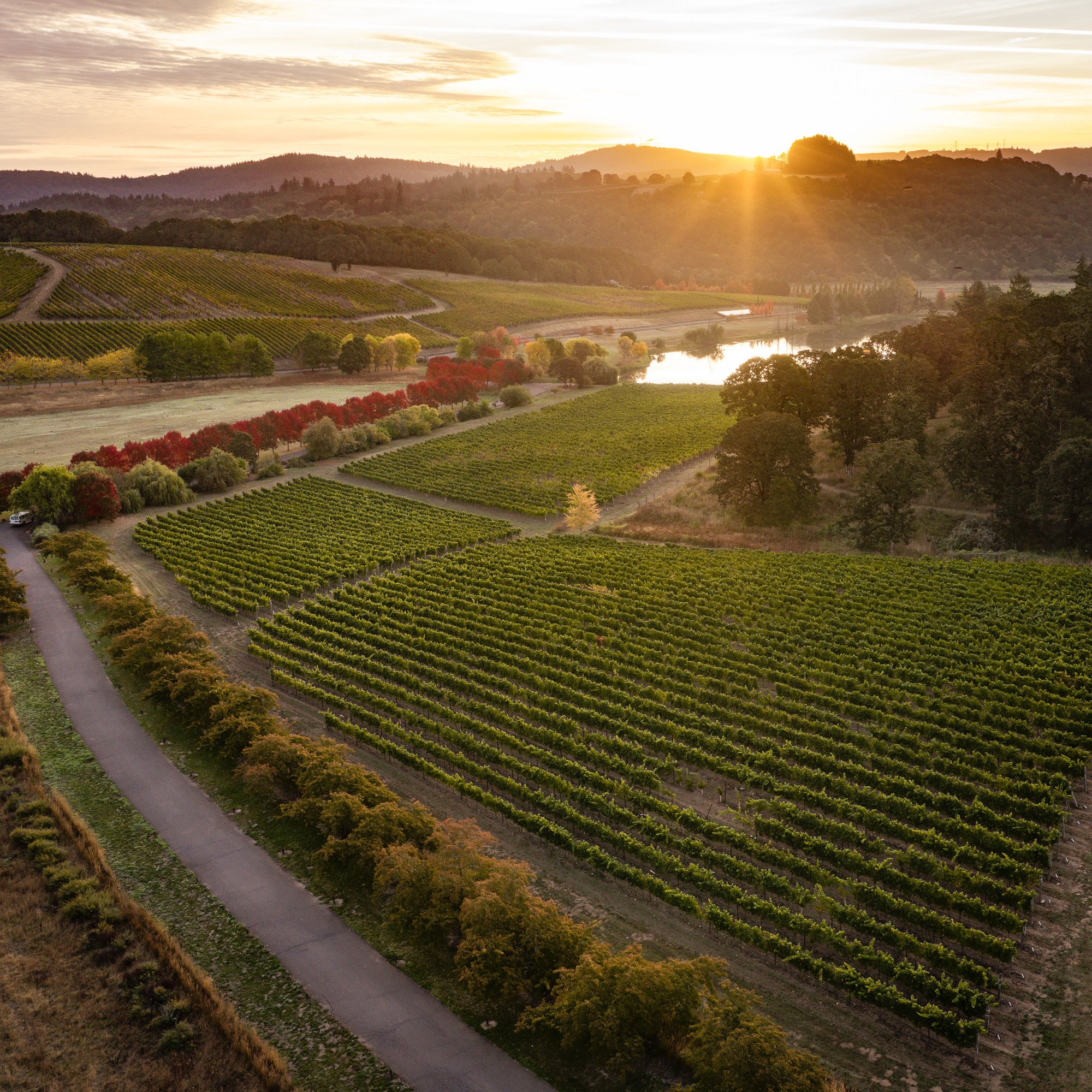
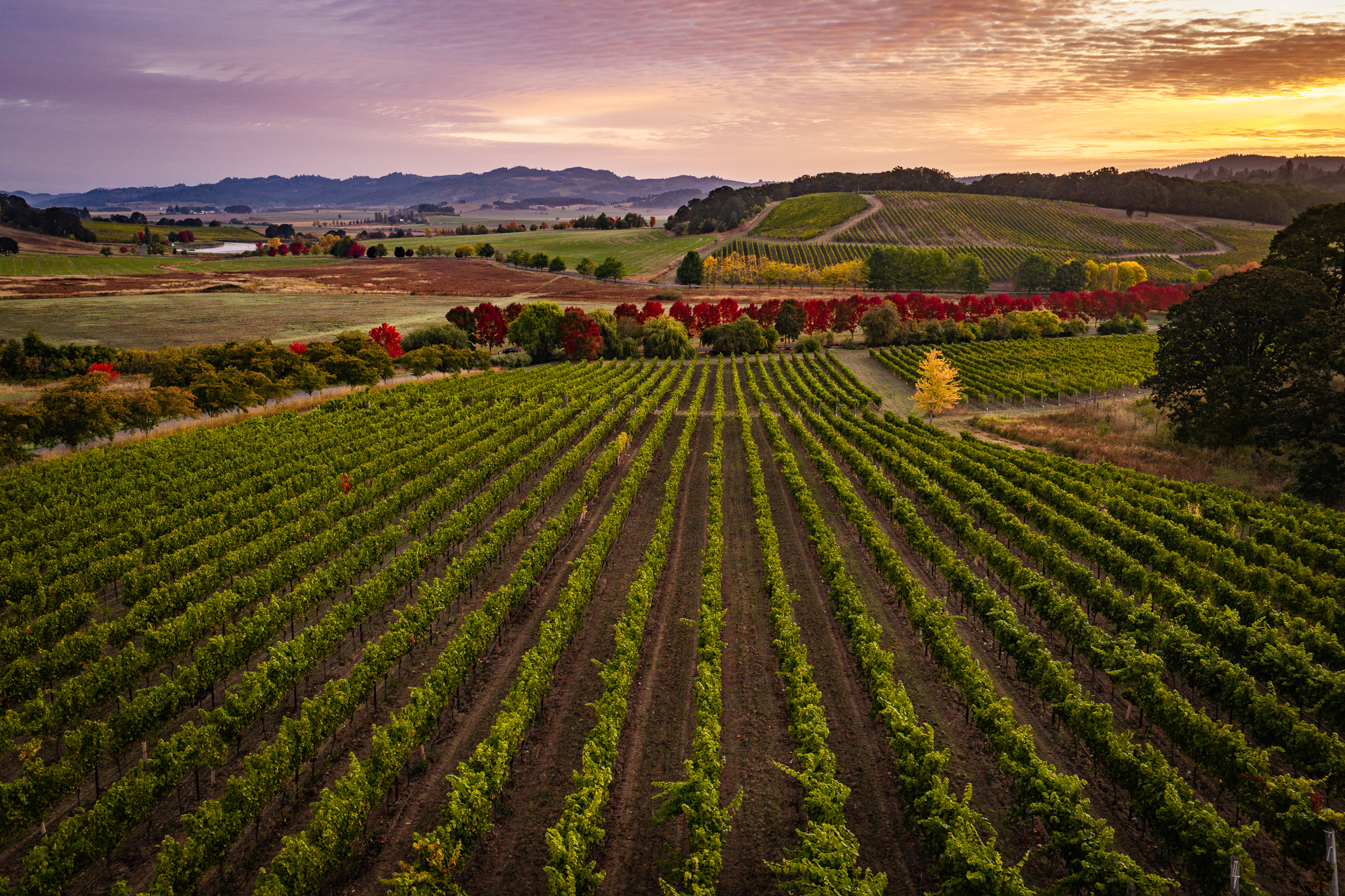
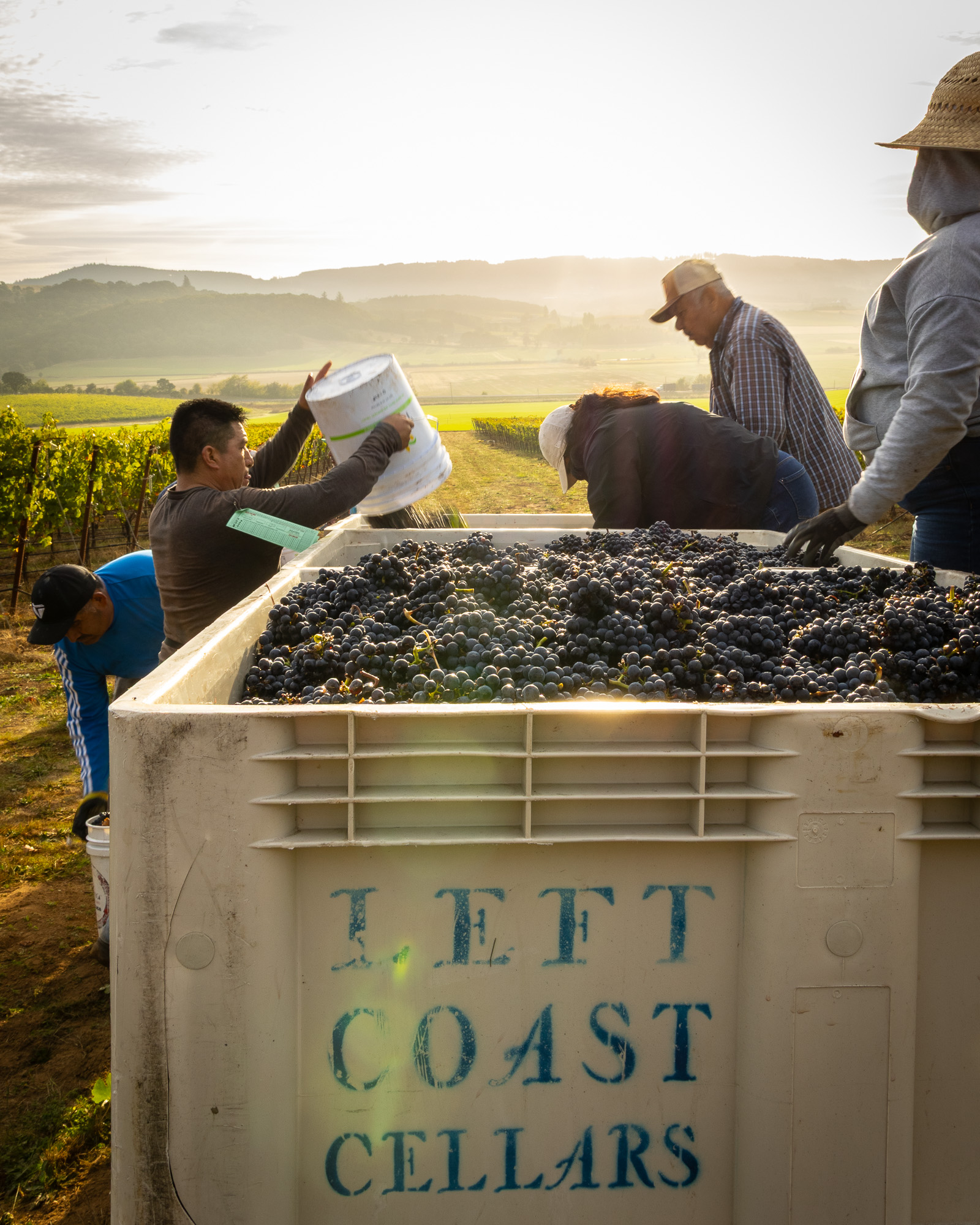
The morning was spent capturing the estate’s scenery with my drone before joining in on the excitement of the Pinot Noir harvest.
At sunrise, I met up with Taylor Pfaff, the CEO and a second-generation member of the family business. His heart and soul are poured into this place, which has been part of his life since he was a little kid.
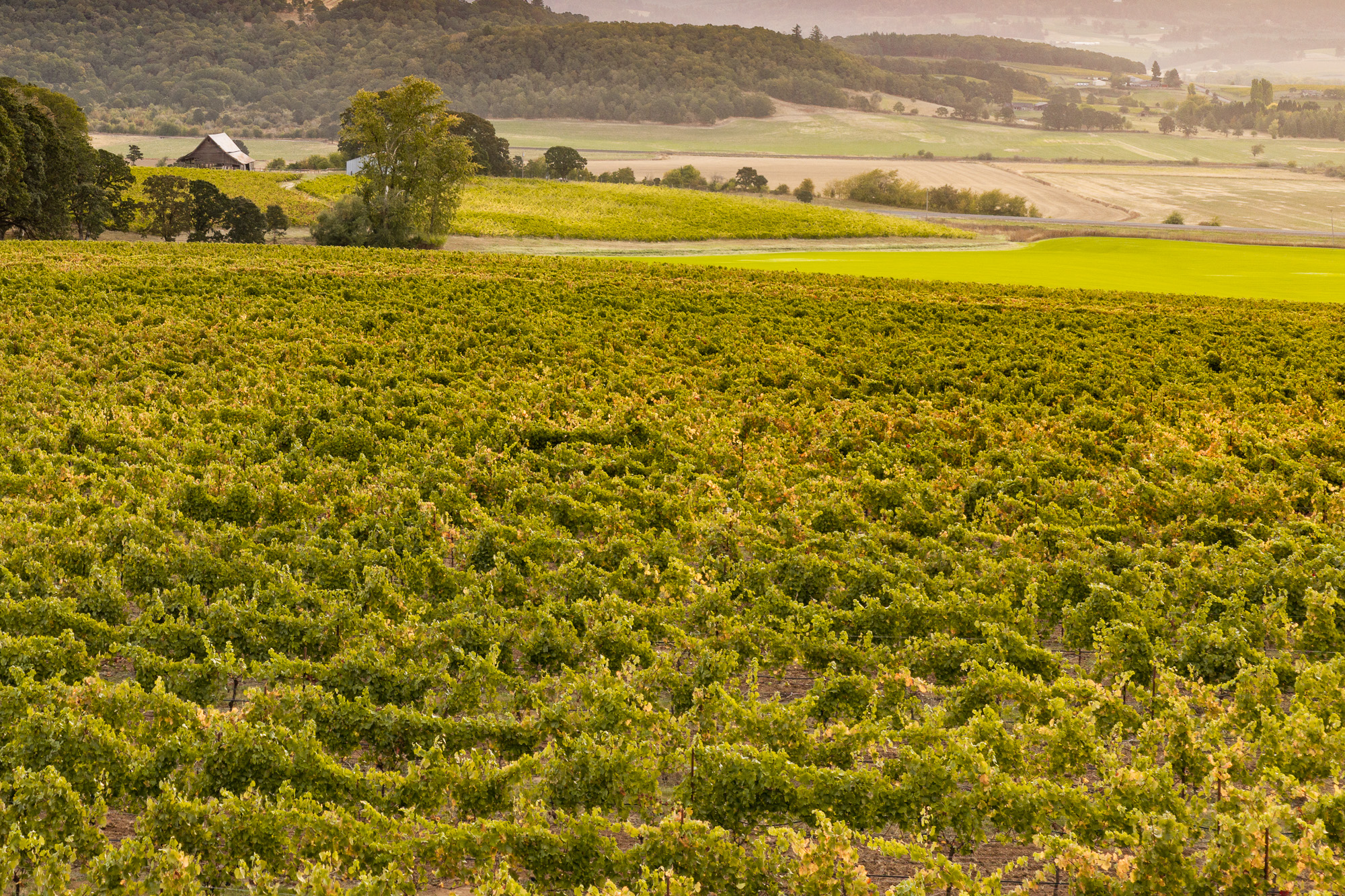
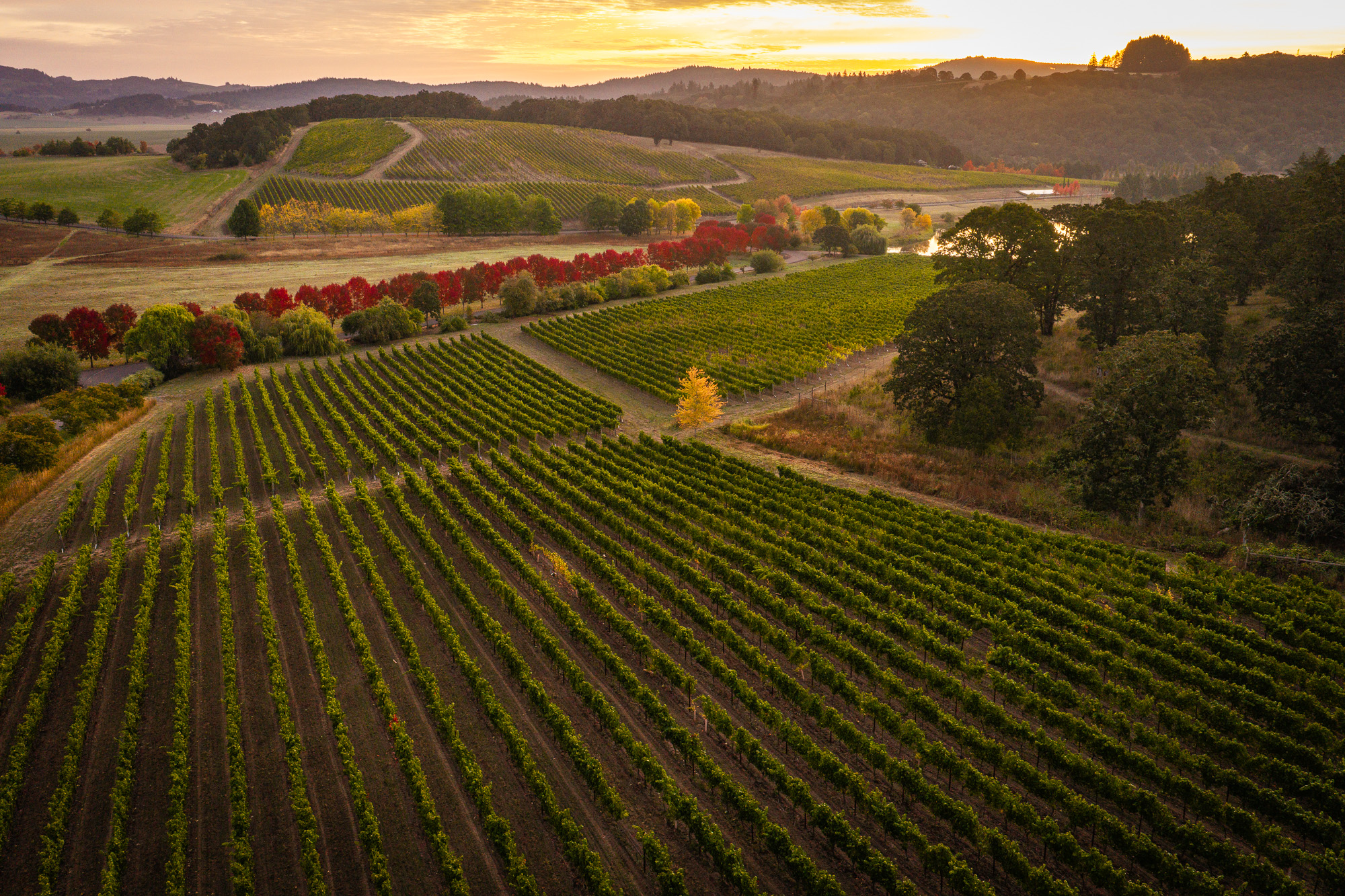
The sunrise views over the vineyard never get old. This particular morning was unusual. Instead of the typical fog lingering among the trees, the vines were crystal clear as the sun rose over the hills.
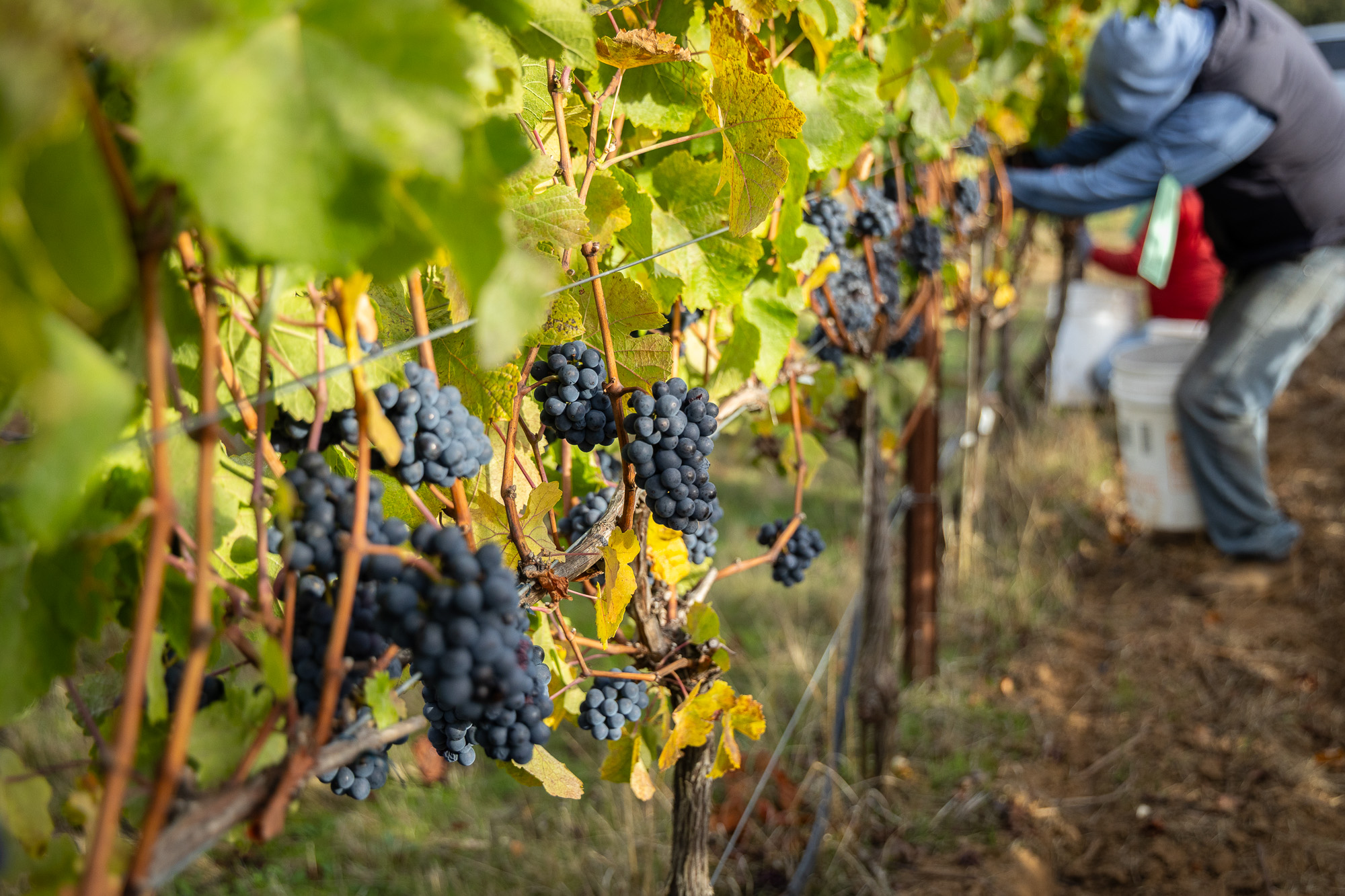
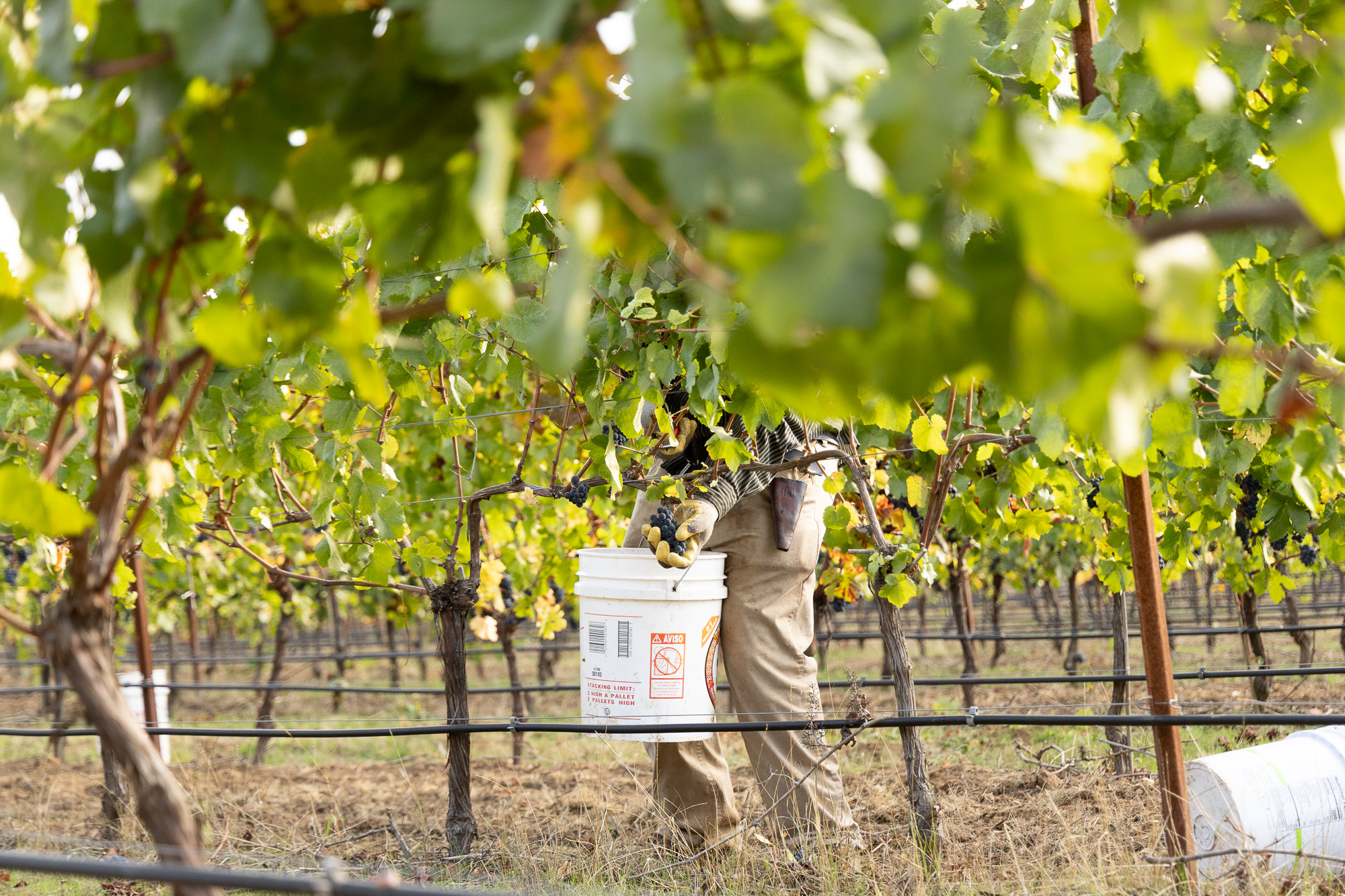
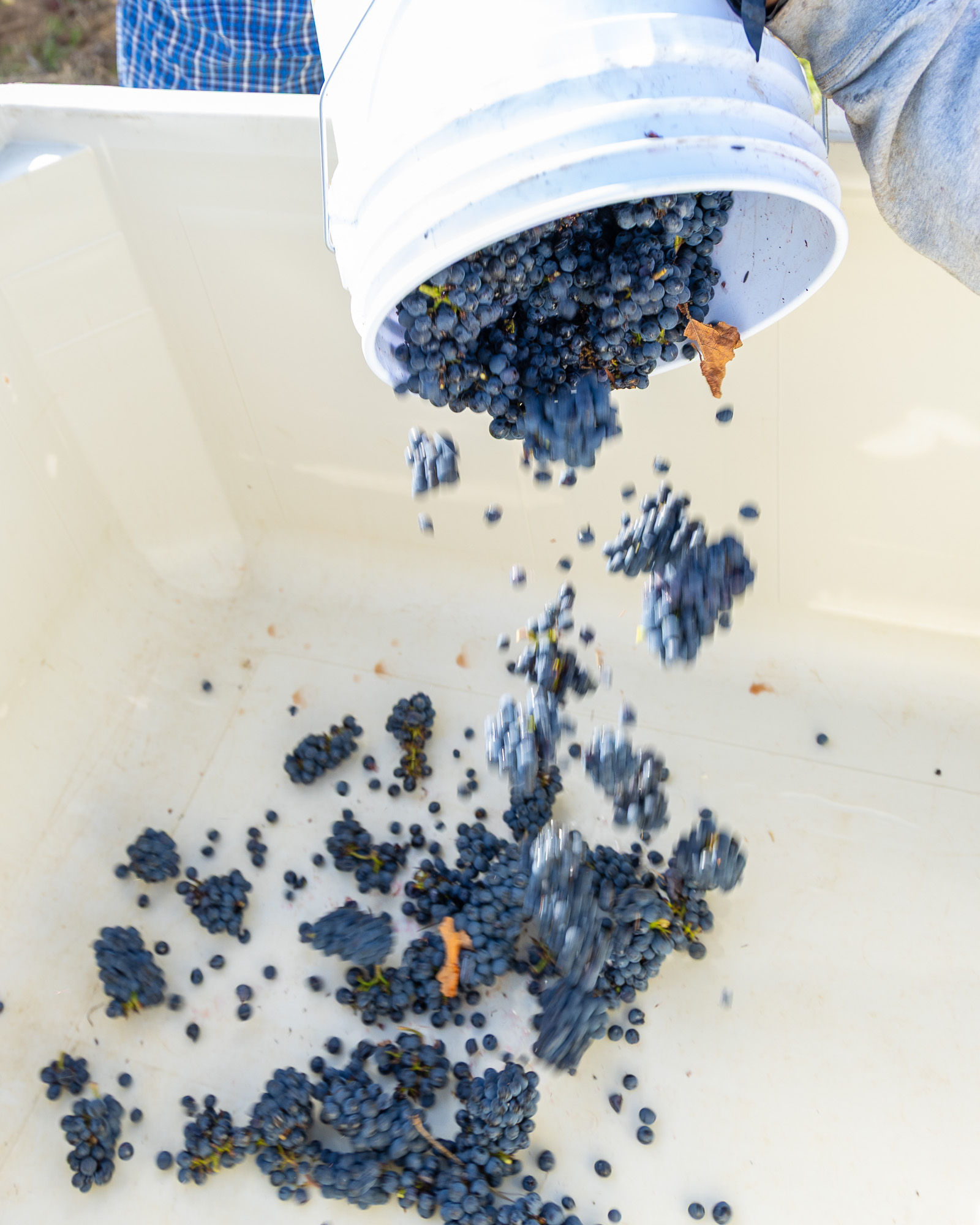
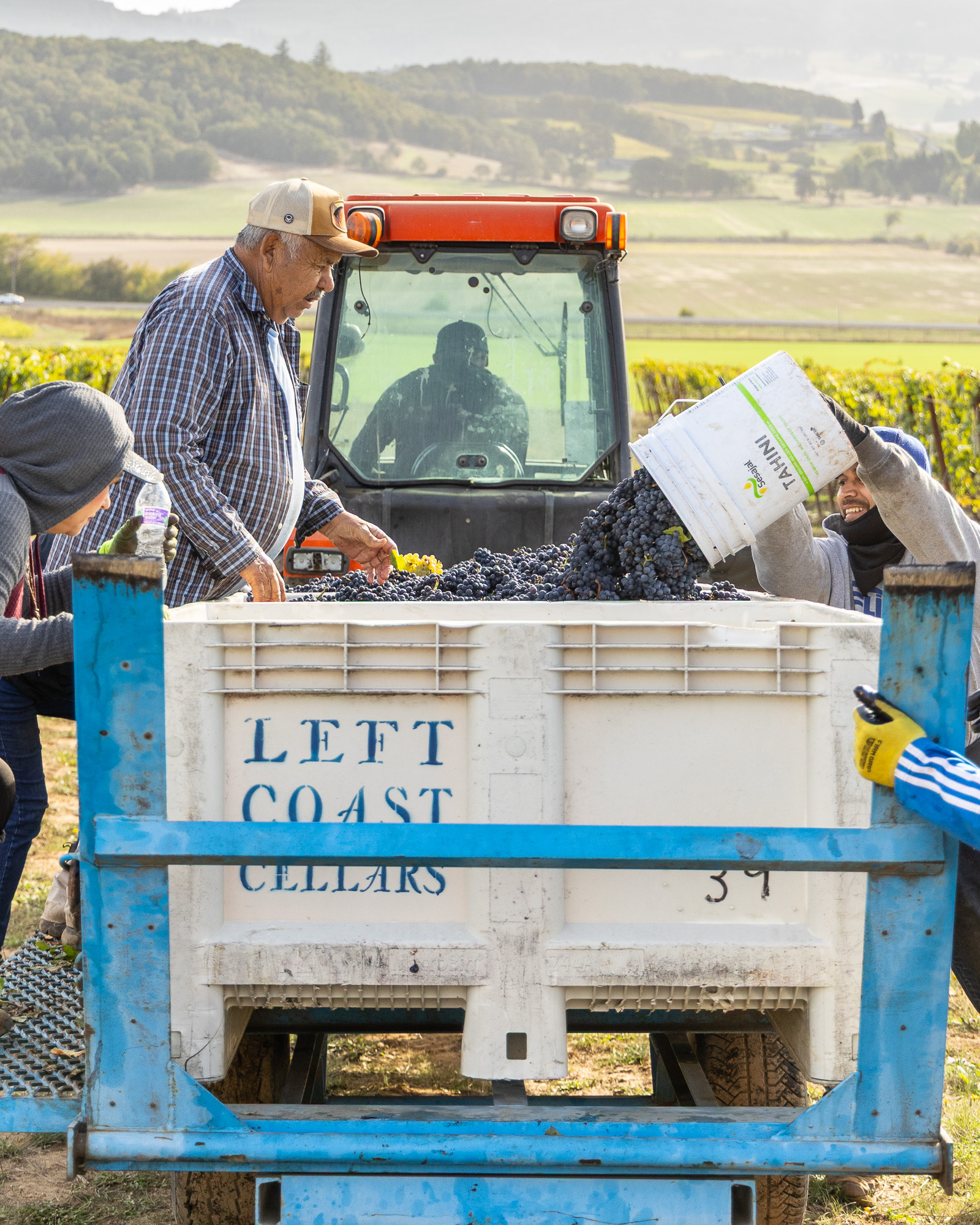
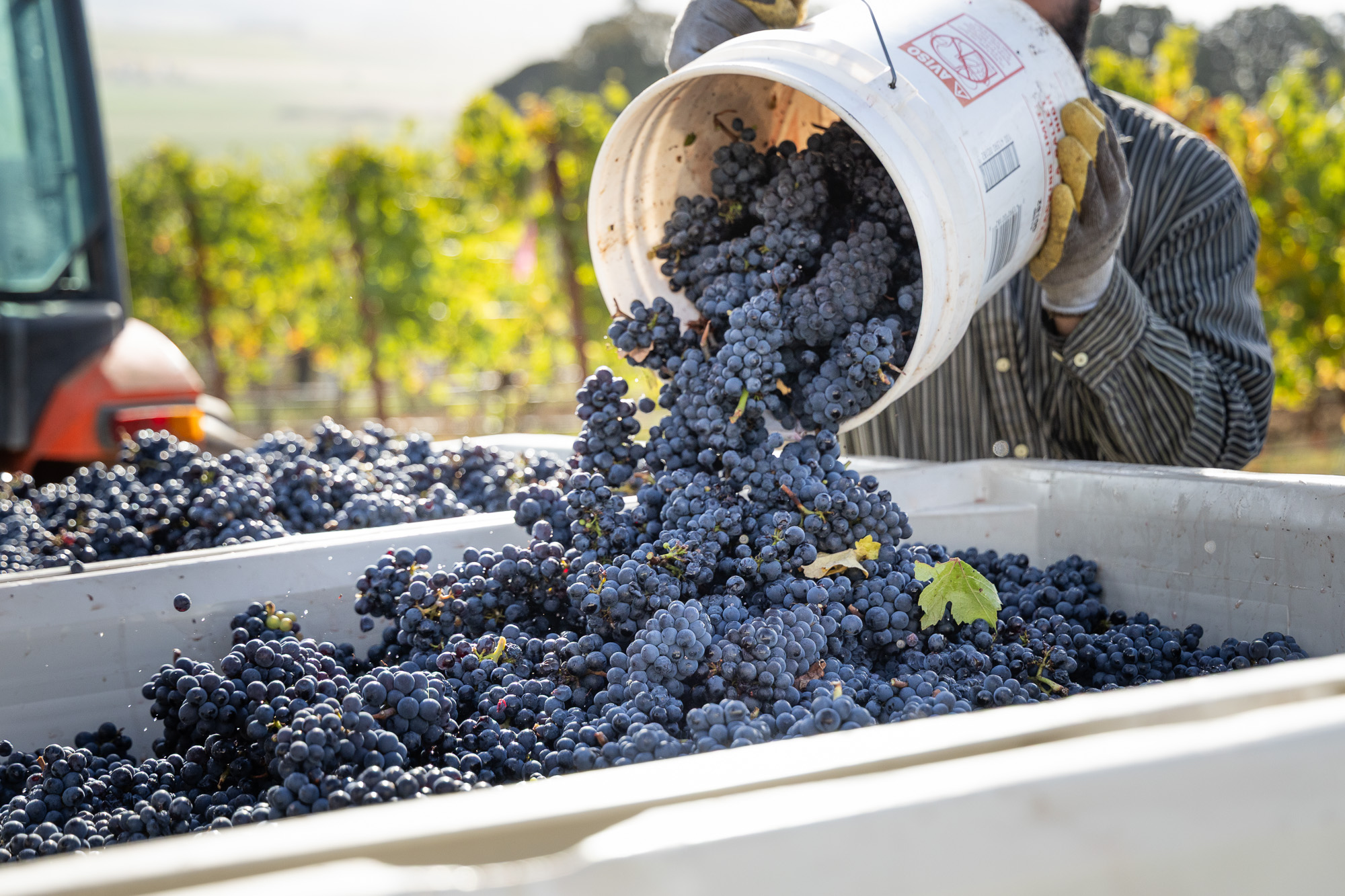
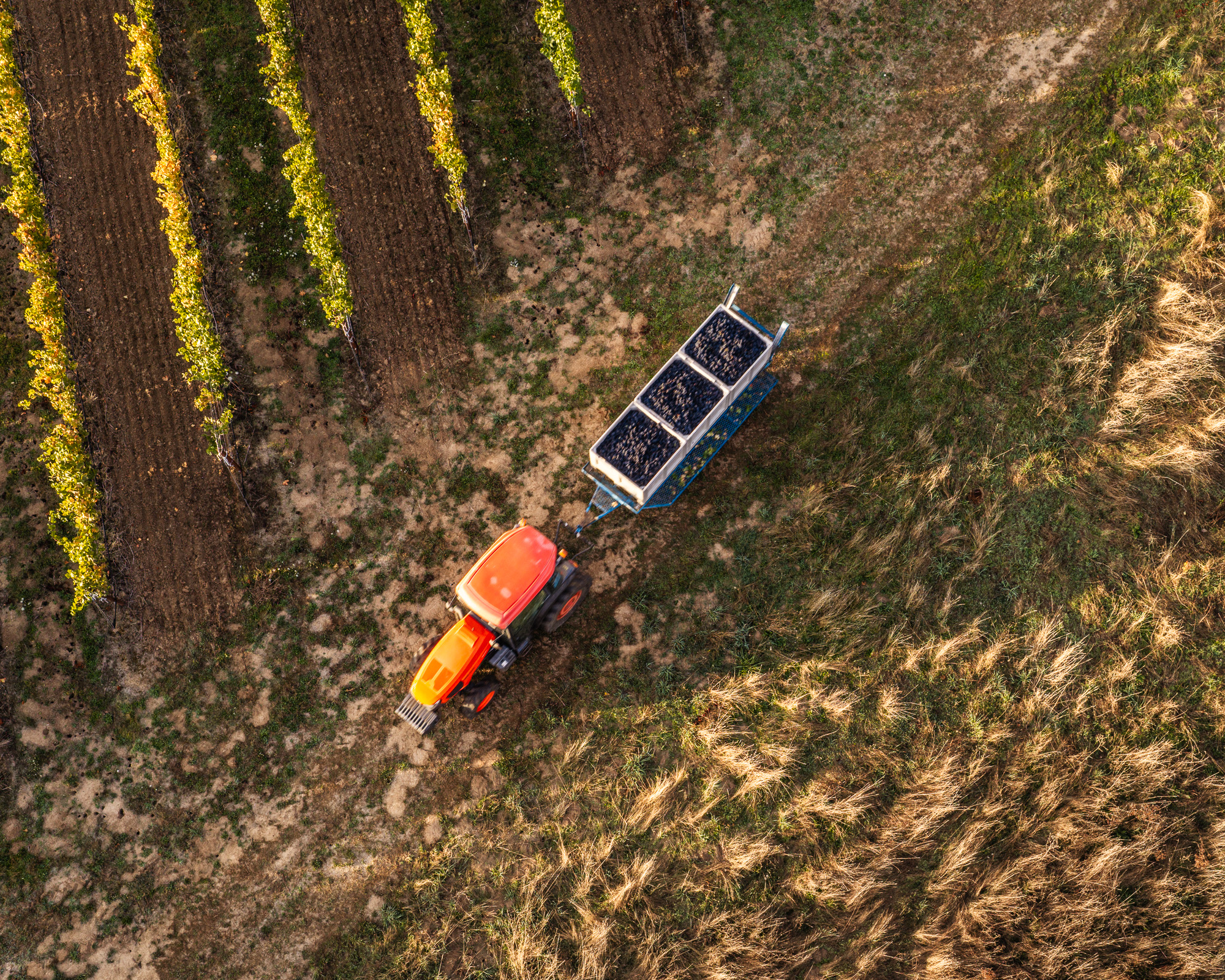
It was a beautiful opportunity to capture the vineyard at the start of the day, along with the activity and energy of harvest.
The Van Duzer Corridor: A Unique Agriculture Region
The Van Duzer Corridor is a distinctive area of the Willamette Valley. Here, ocean breezes travel inland from about 50 miles away, bringing cooling winds to the vineyards during summer afternoons.
Approximately 1,000 acres of different vineyards thrive within this 36-square-mile area. The natural airflow helps keep the vines dry, reducing the risk of fungal diseases. It also contributes to thicker grape skins, which can provide more tannins and anthocyanins—compounds that contribute to a wine’s structure, color, and character.
Because growing conditions change from year to year, each vintage can offer something different. It’s one of the reasons wine enthusiasts look forward to experiencing the unique flavors of Willamette Valley Pinot Noir across different harvests. Left Coast Estate’s wines have earned scores of 90 points and above, reflecting the quality recognized by wine critics. It’s interesting to consider how the estate’s approach to the land, along with its climate, soil, and vineyard practices, create this finished wine.
Harvesting Wine Grapes
A place like Left Coast Estate depends on more than its landscape. It also takes people who understand the land, the grapes, and the winemaking process.
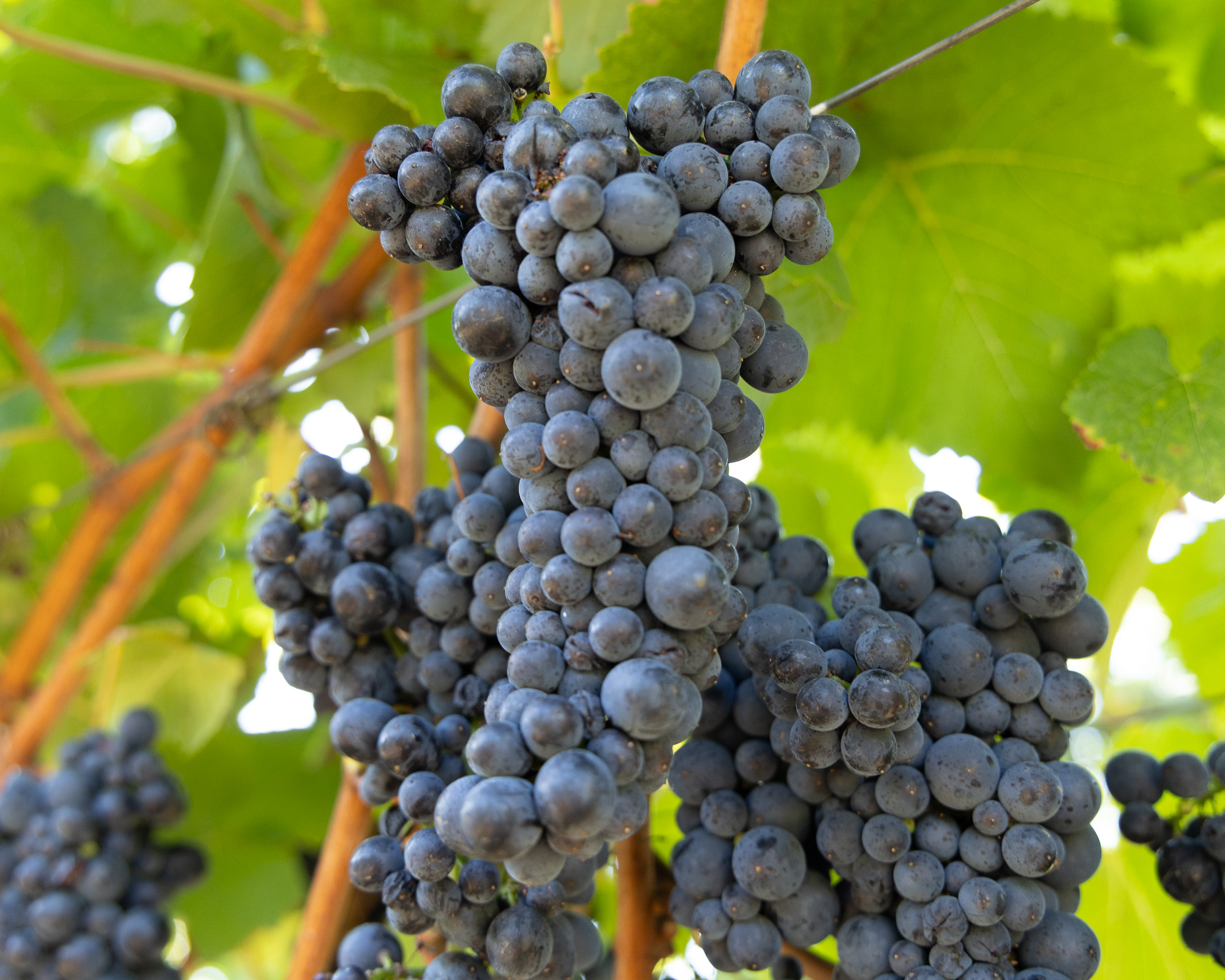
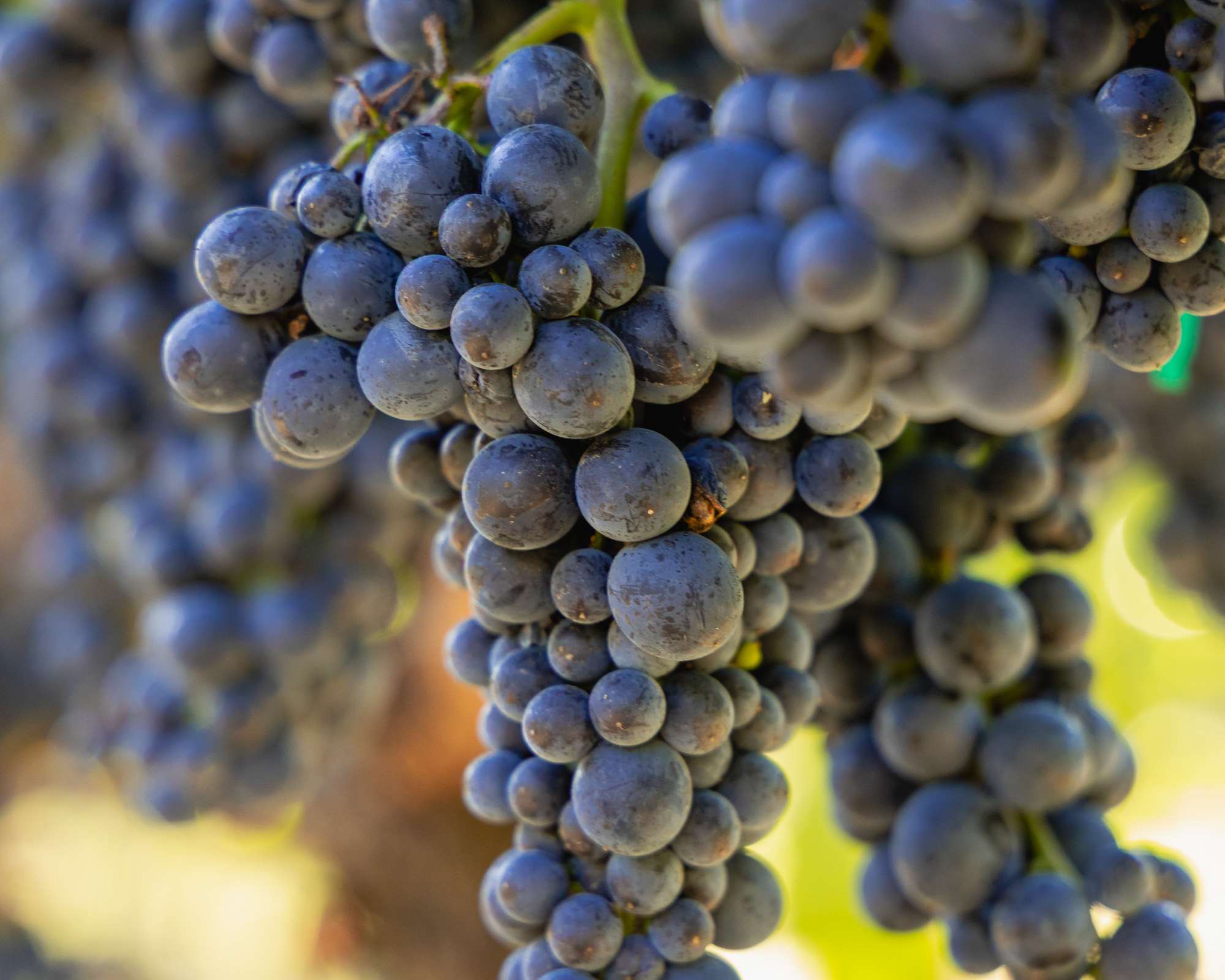
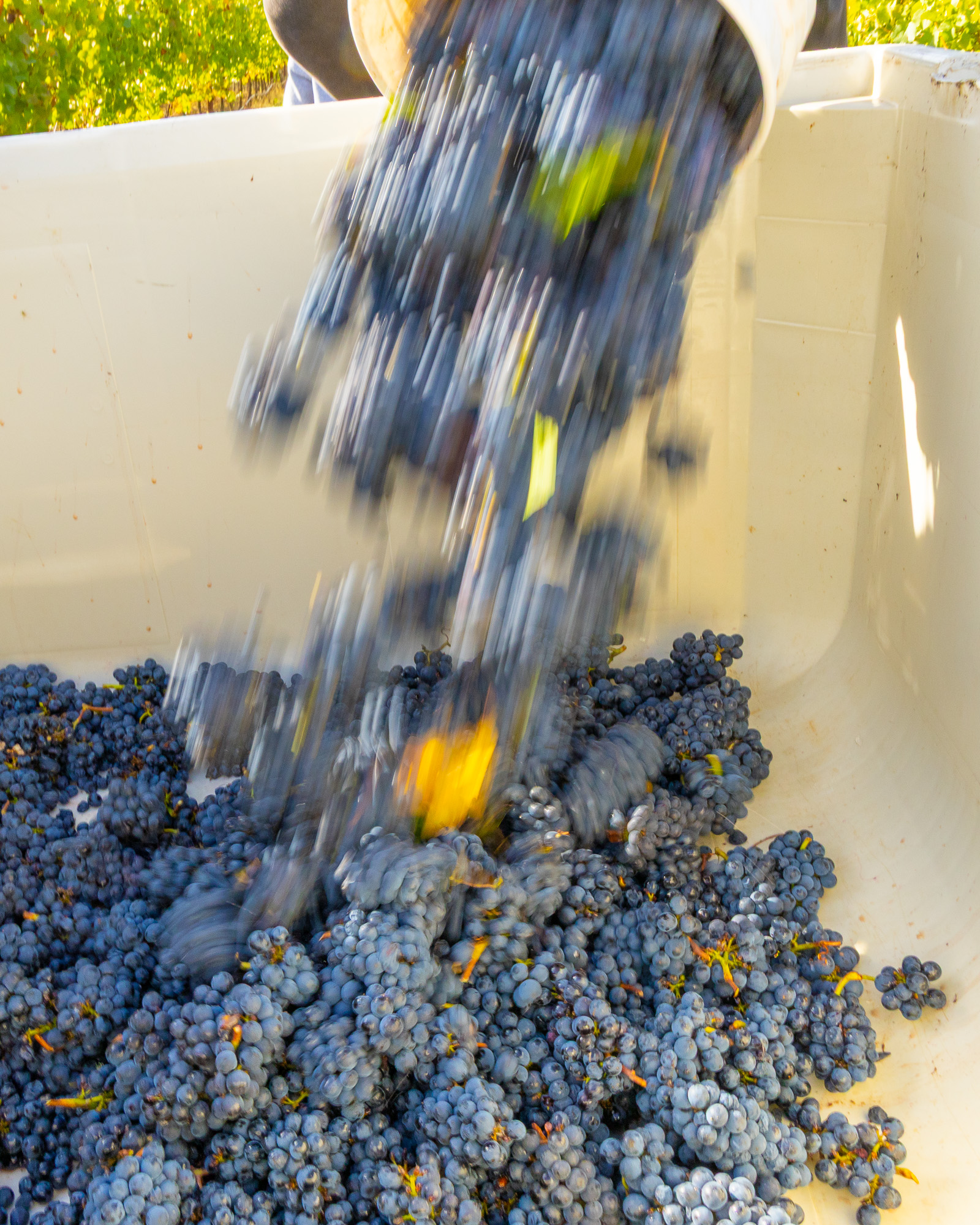
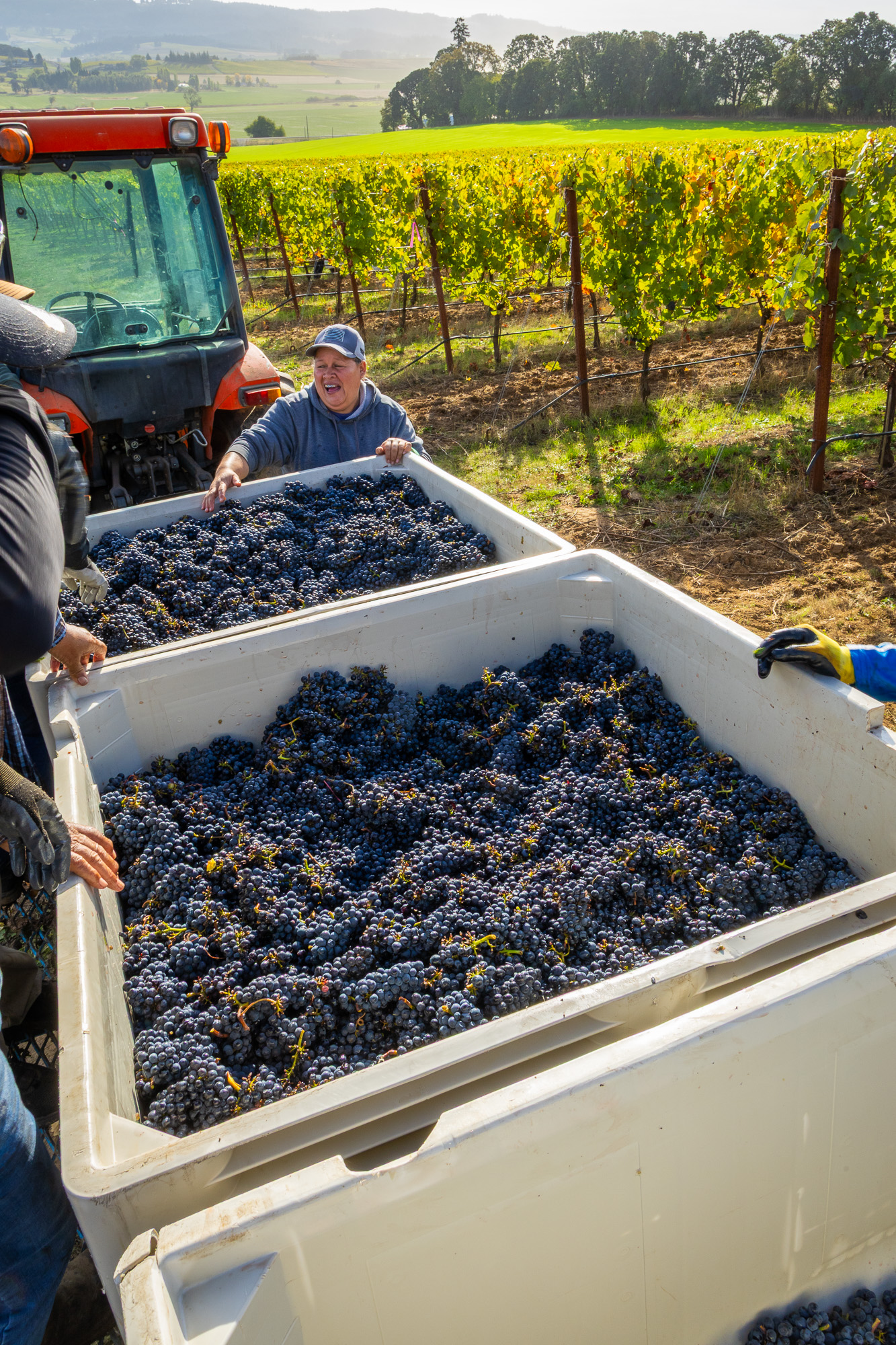
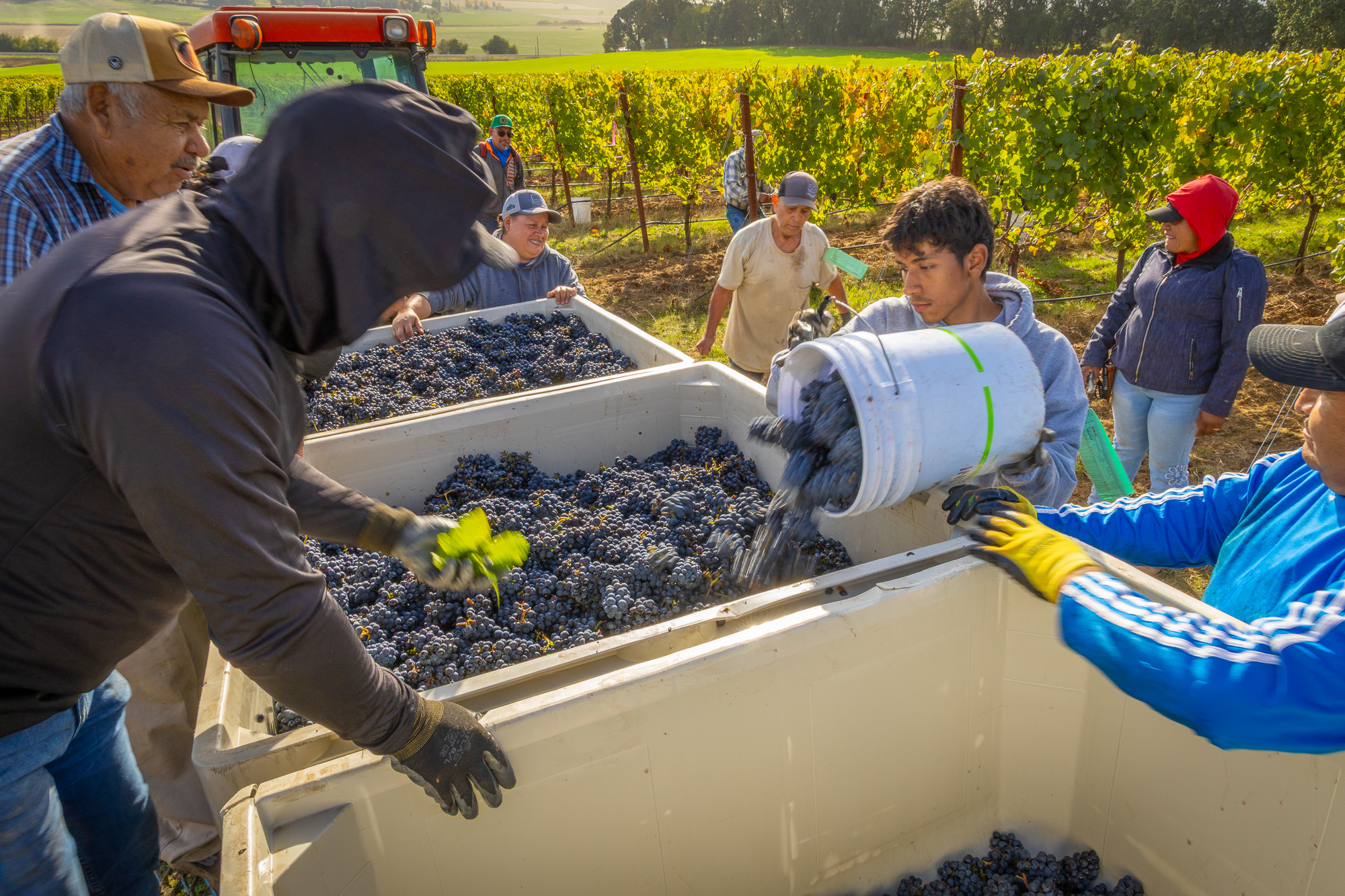
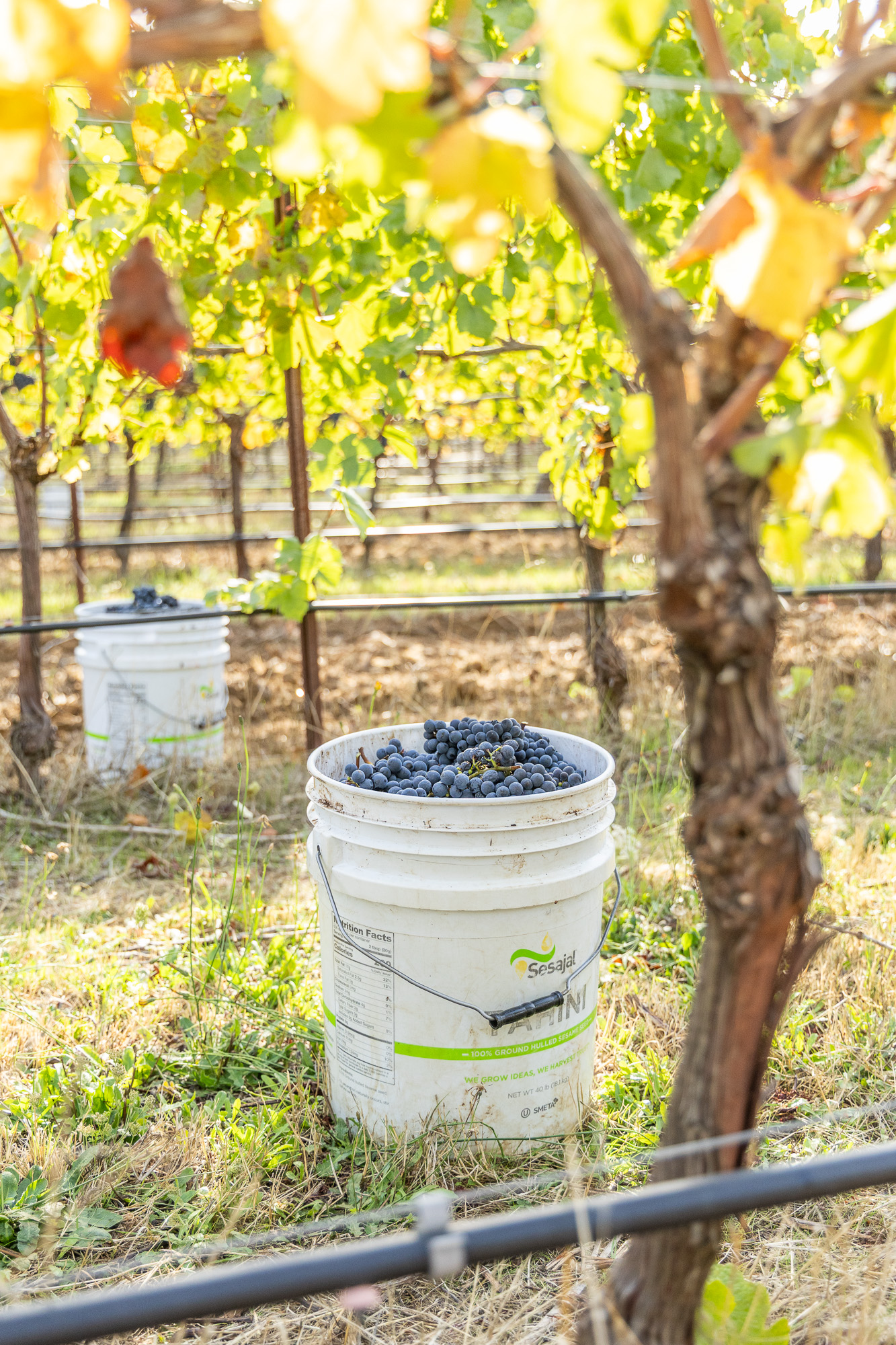
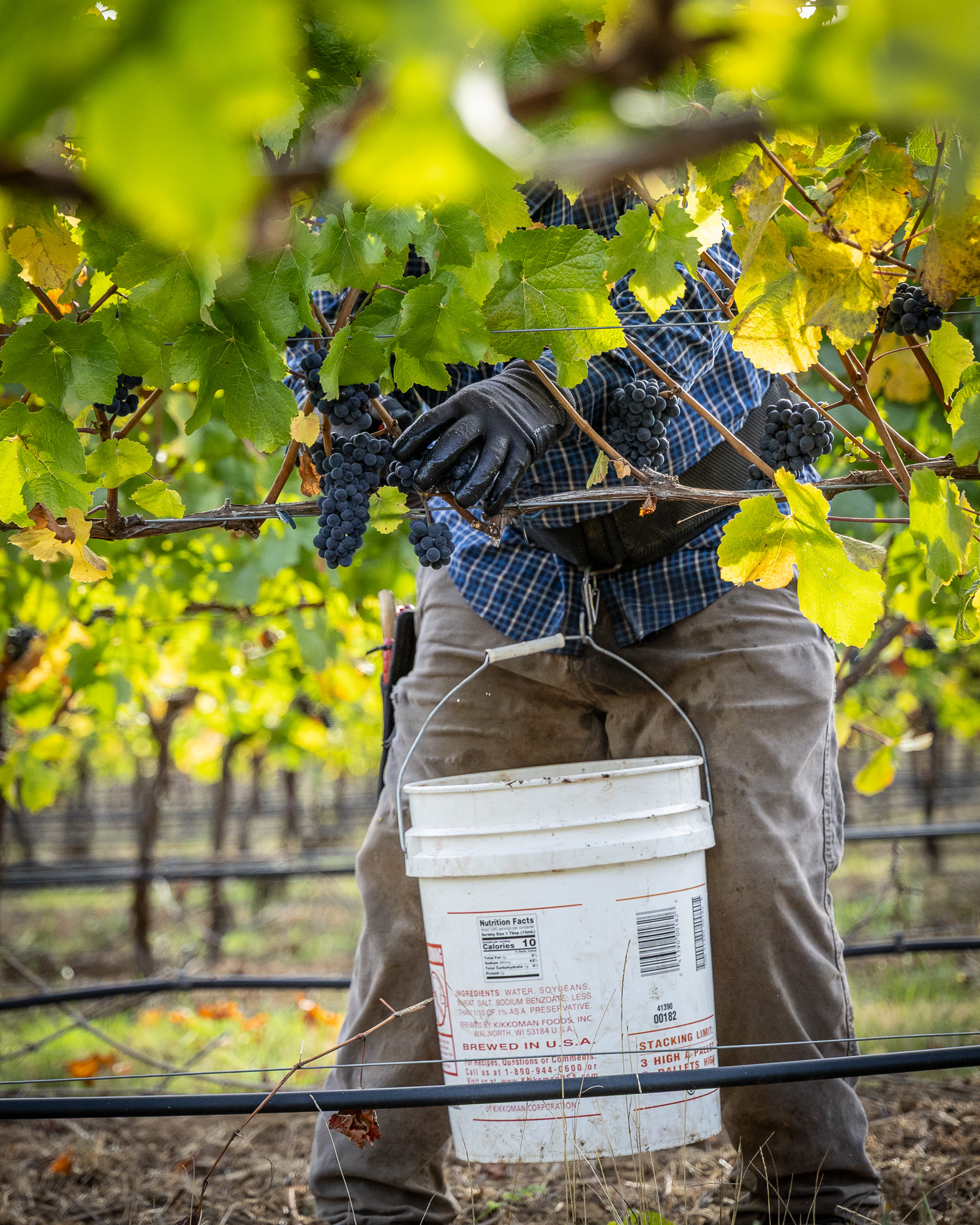
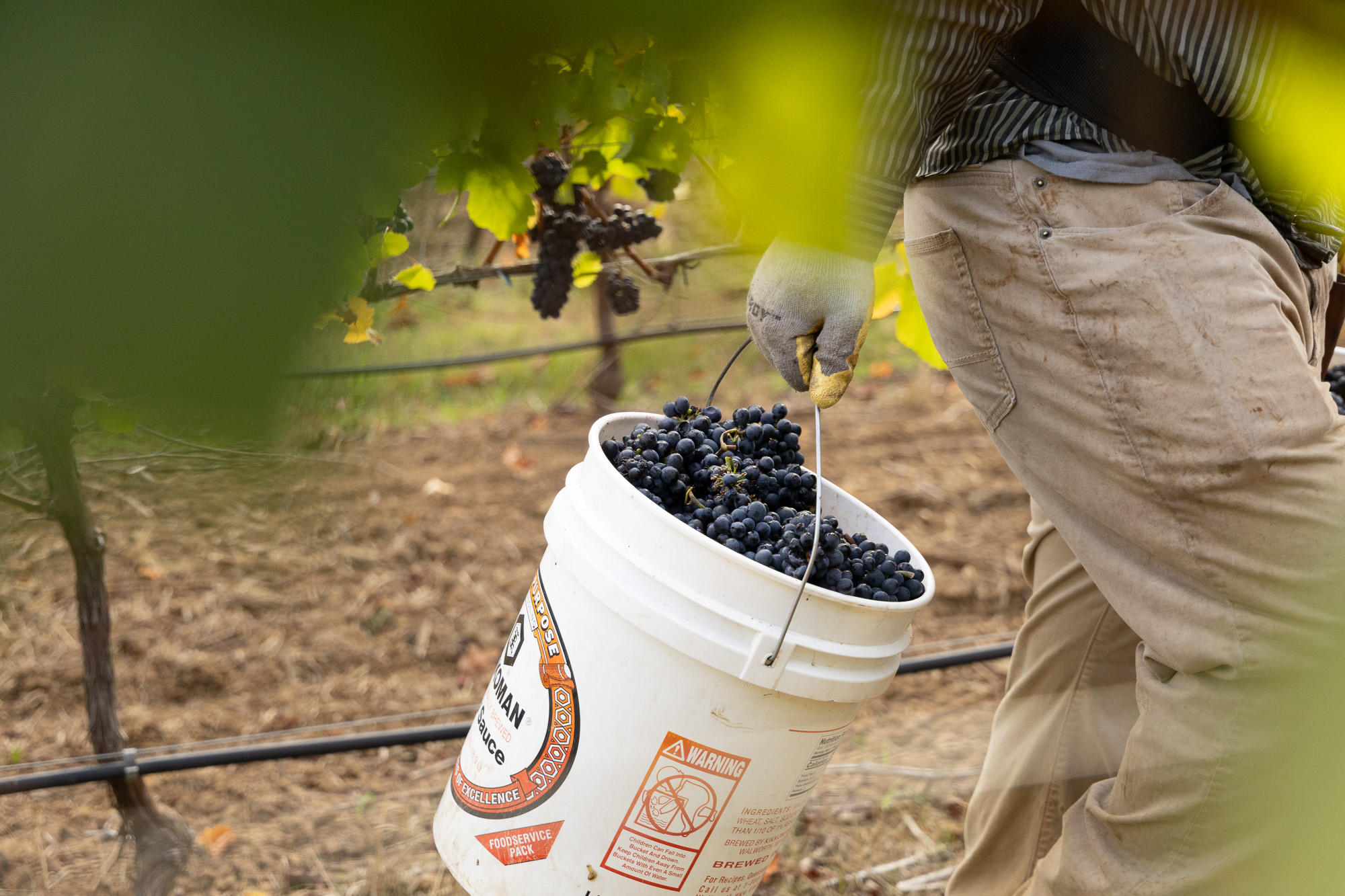
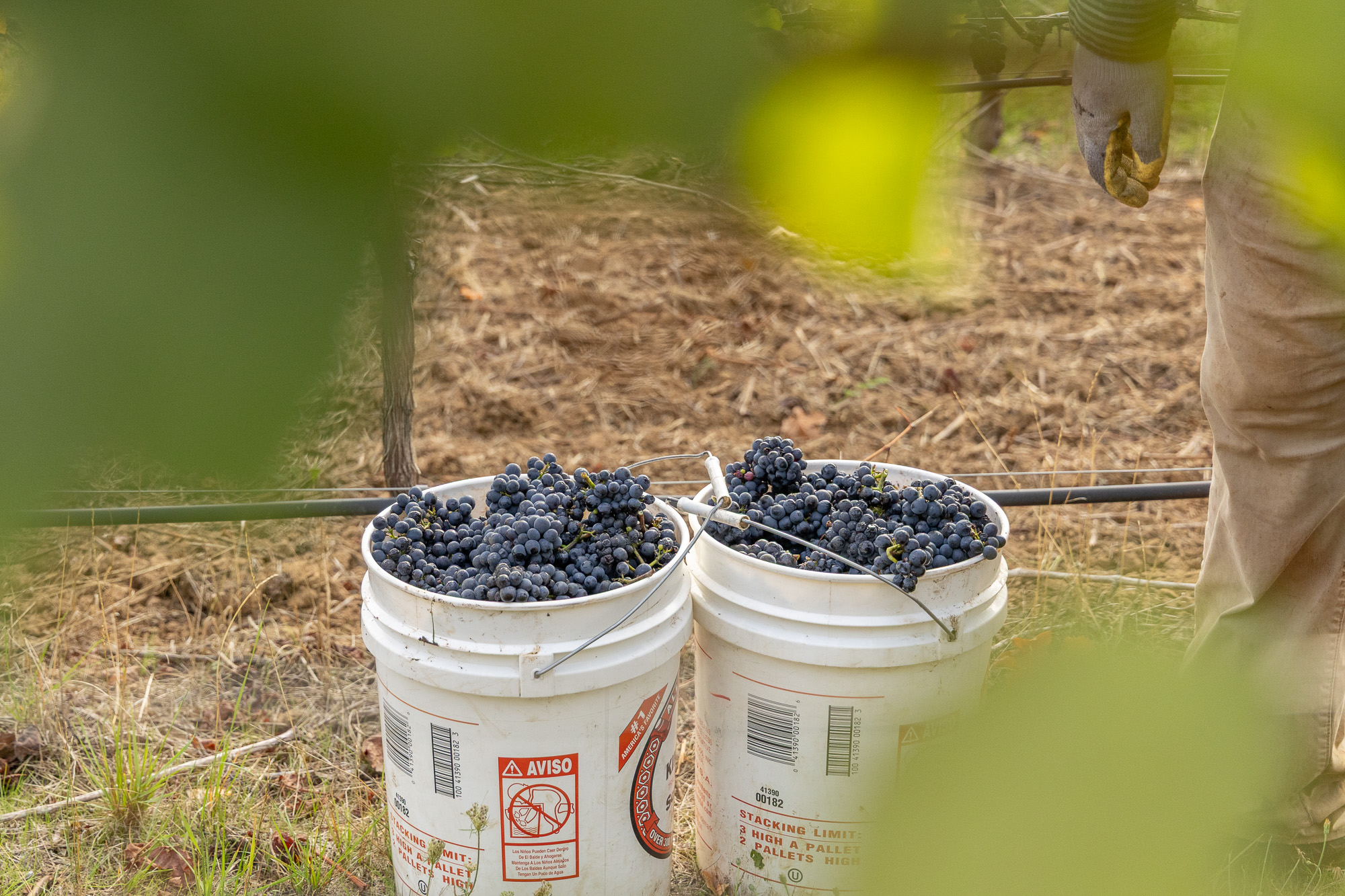
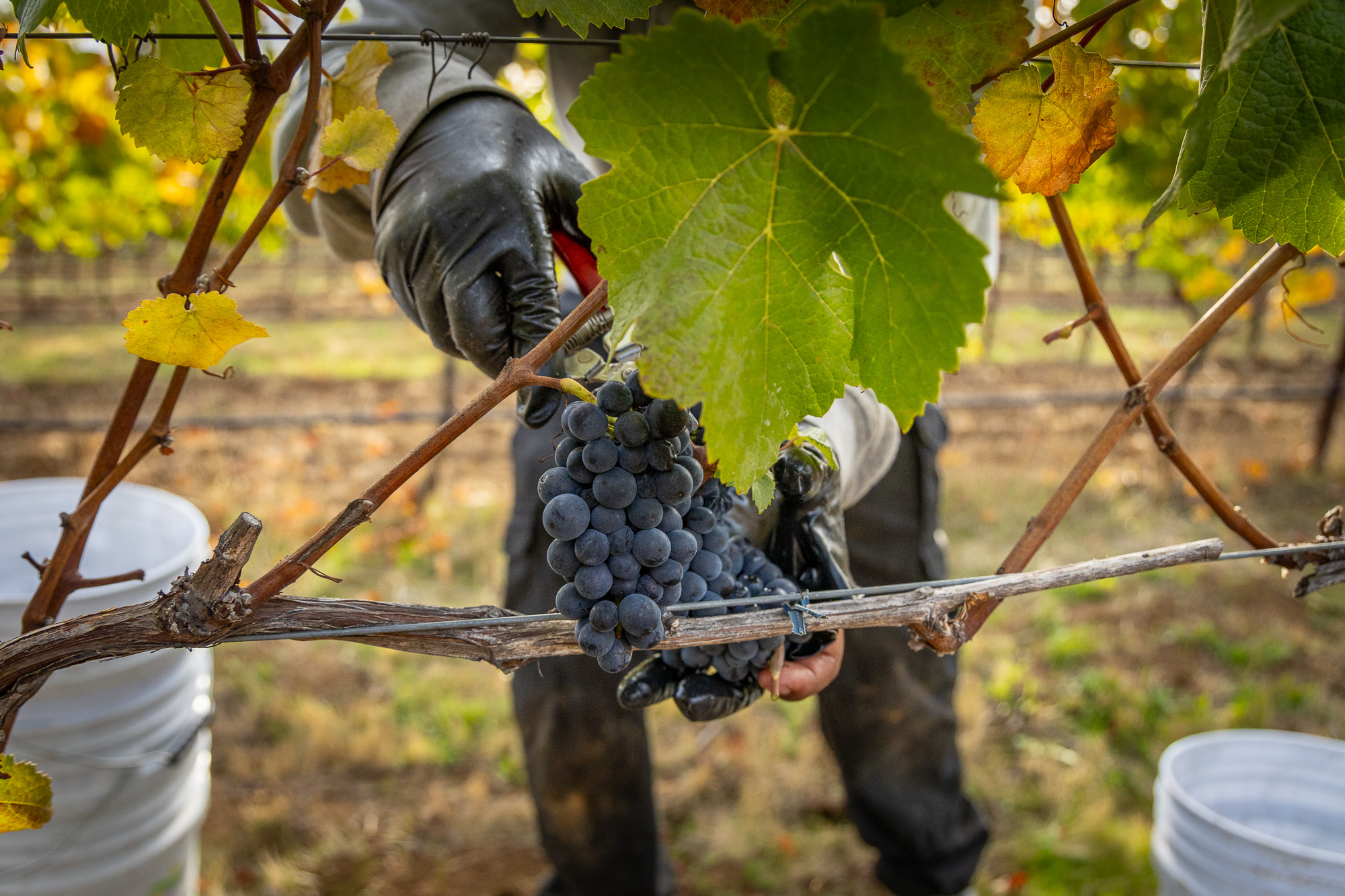
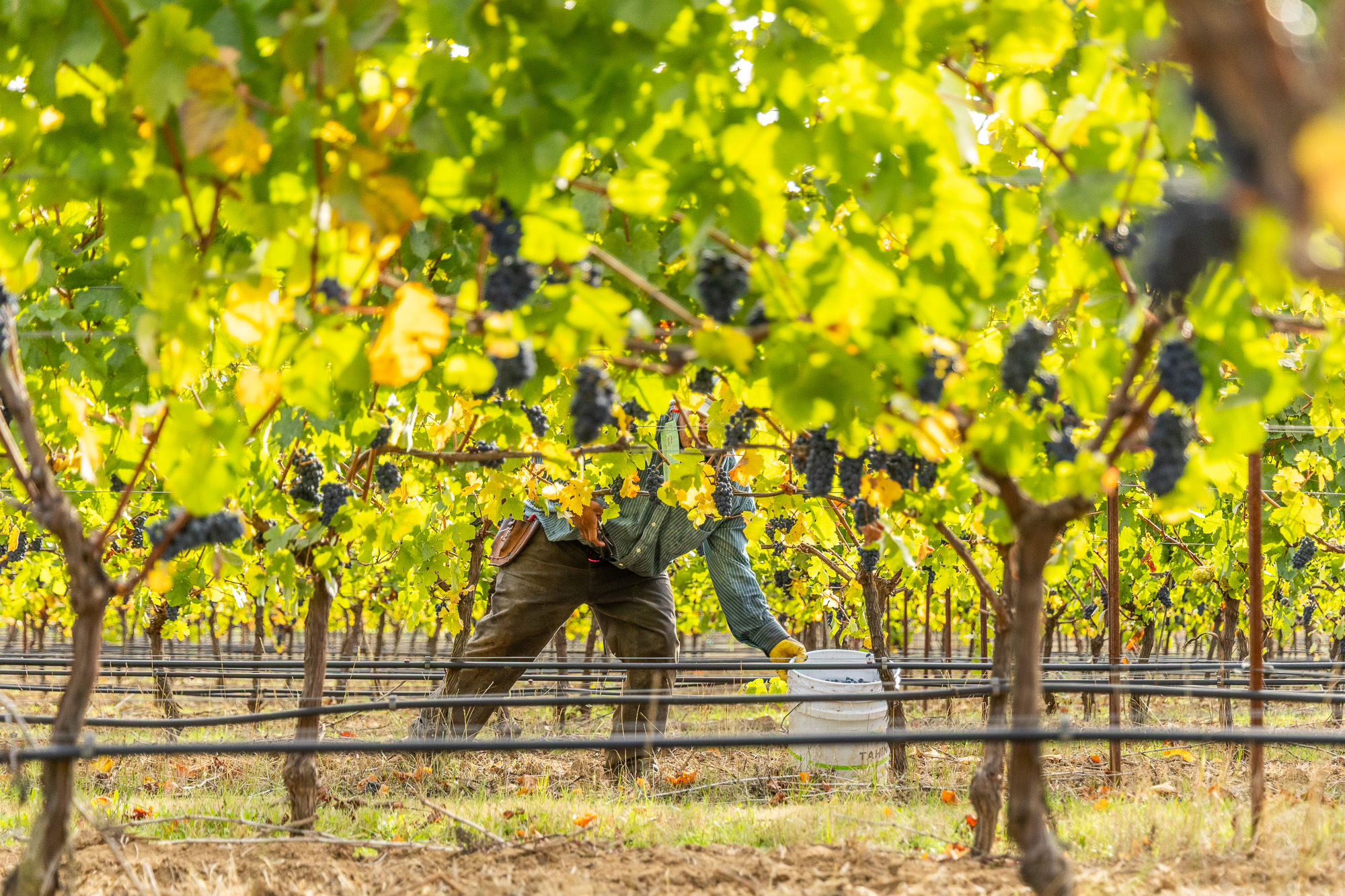
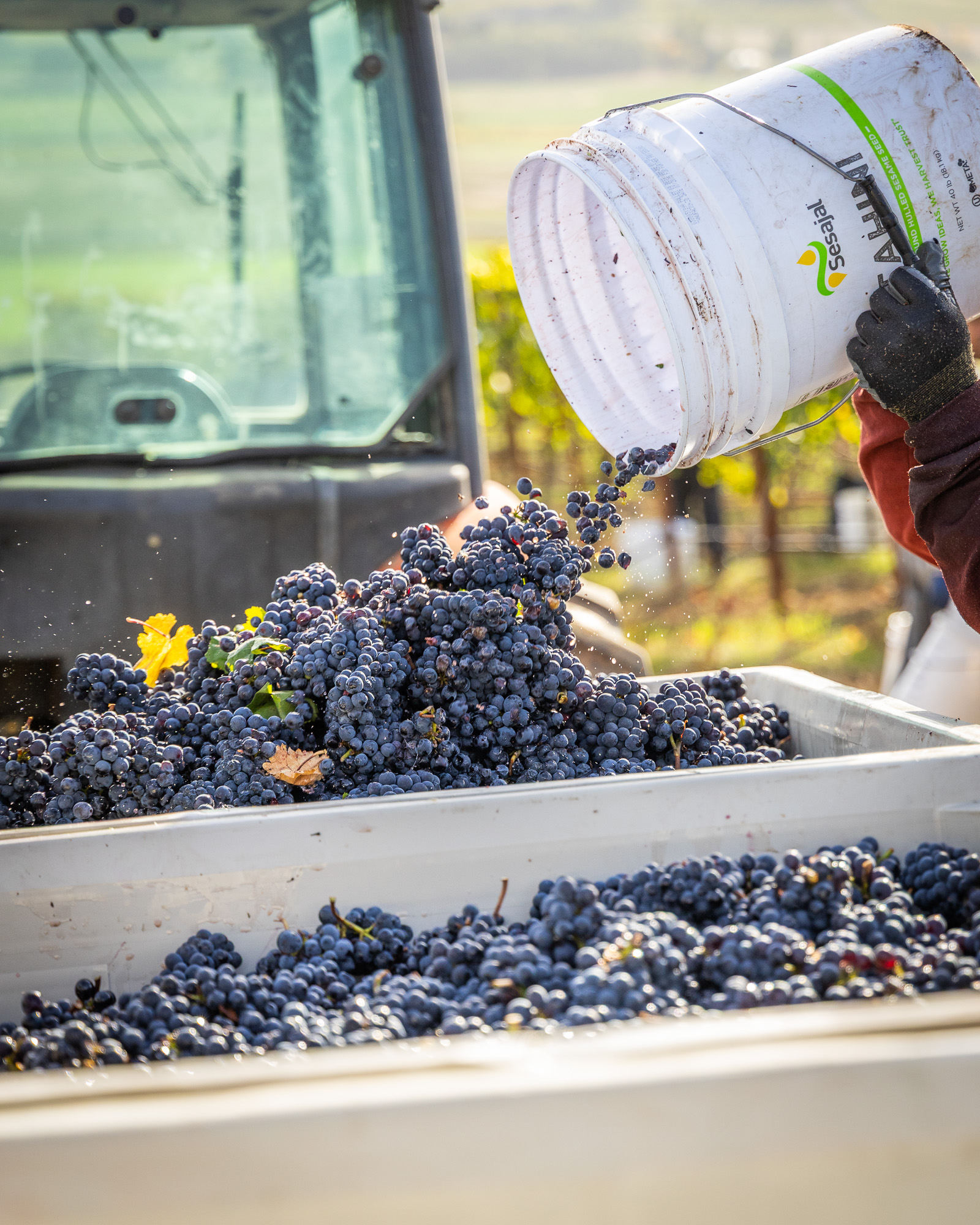
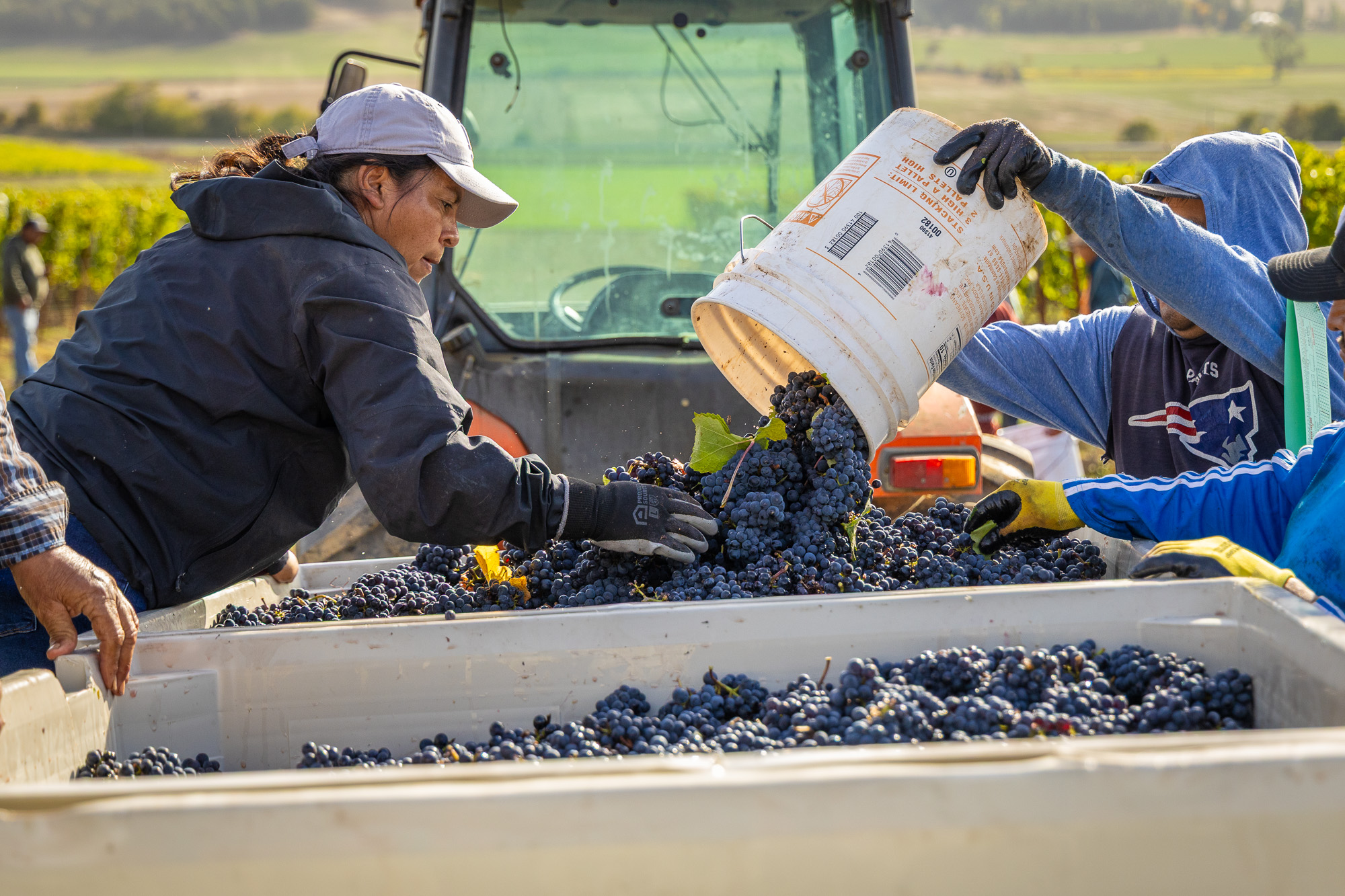
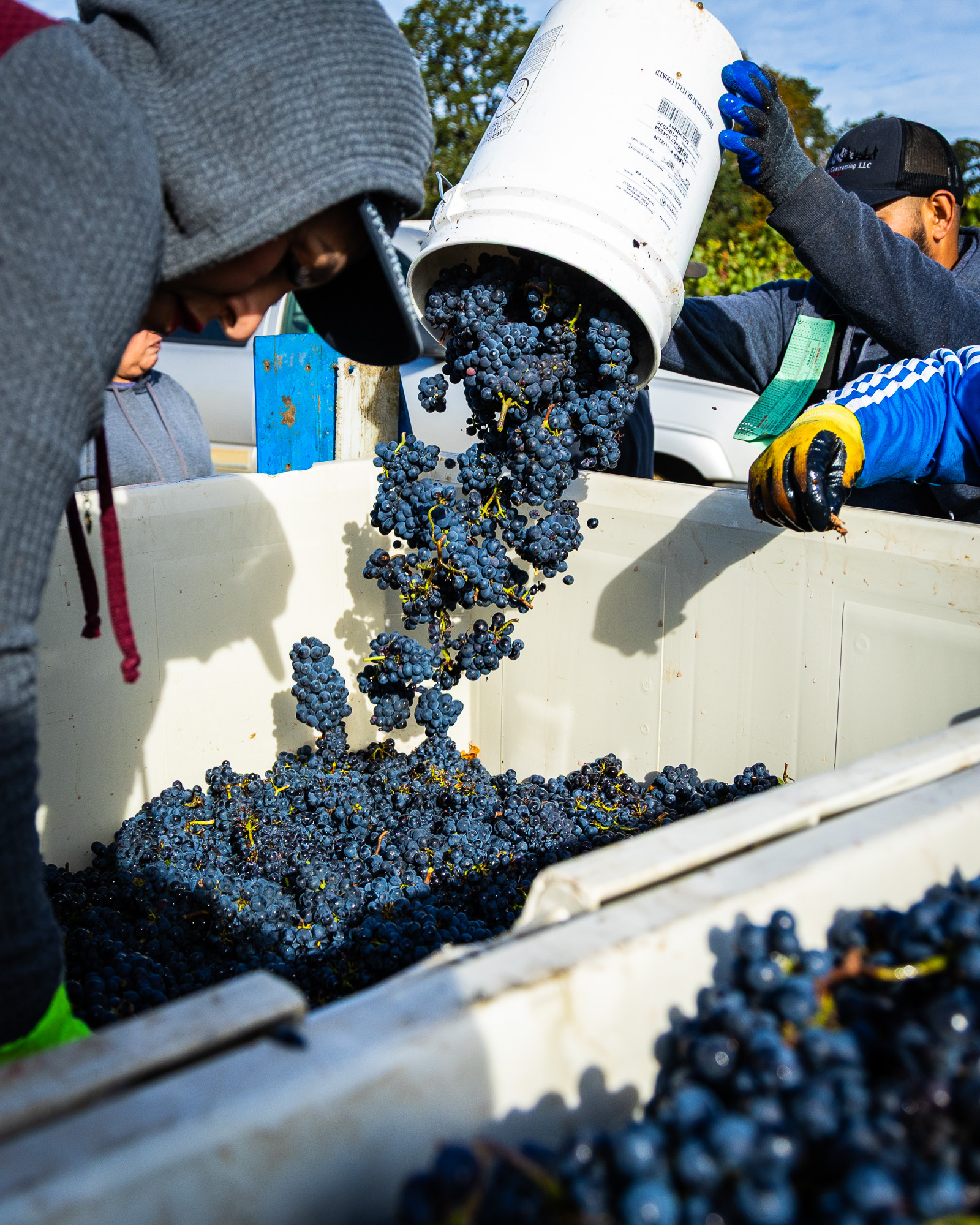
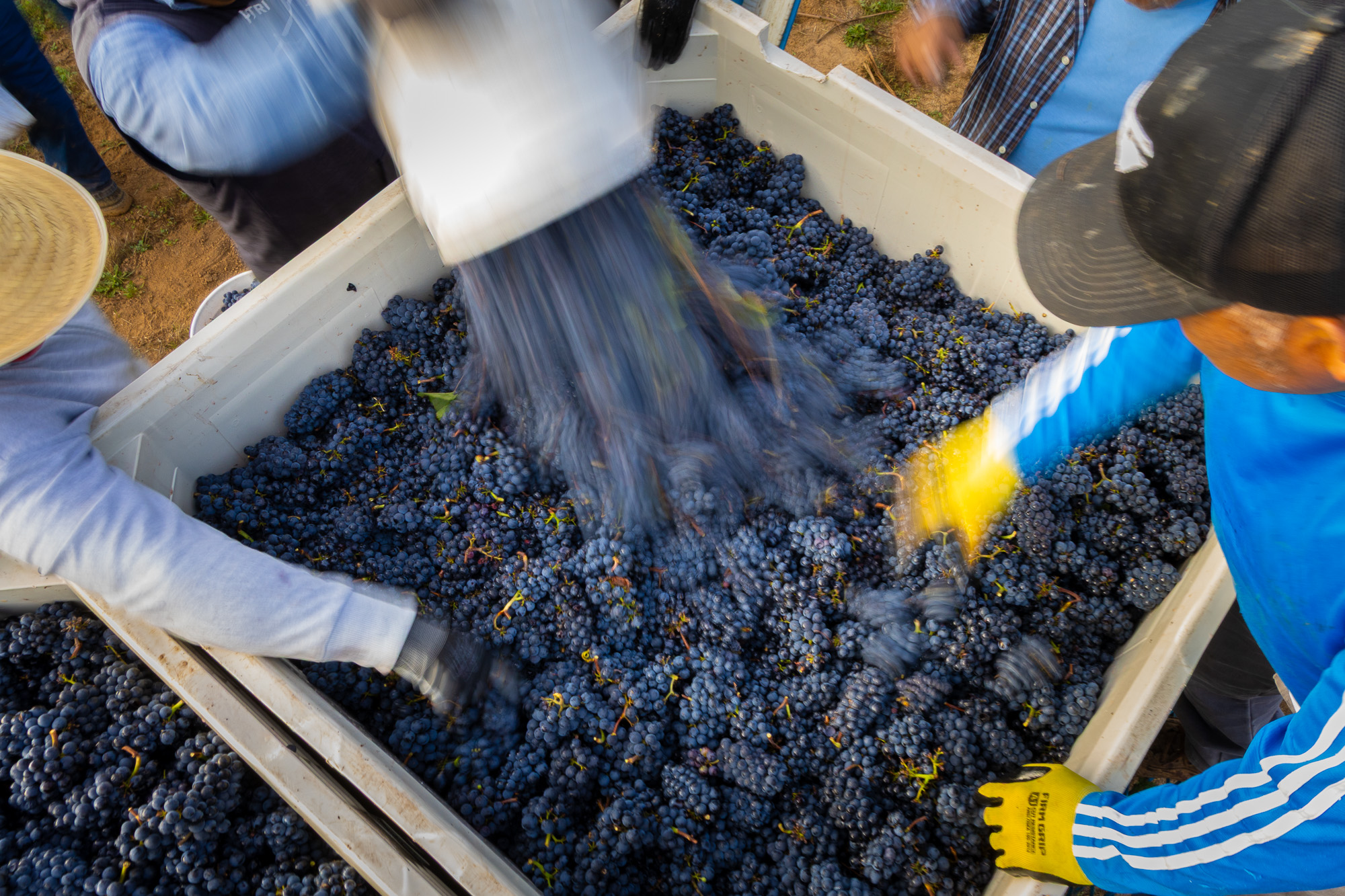
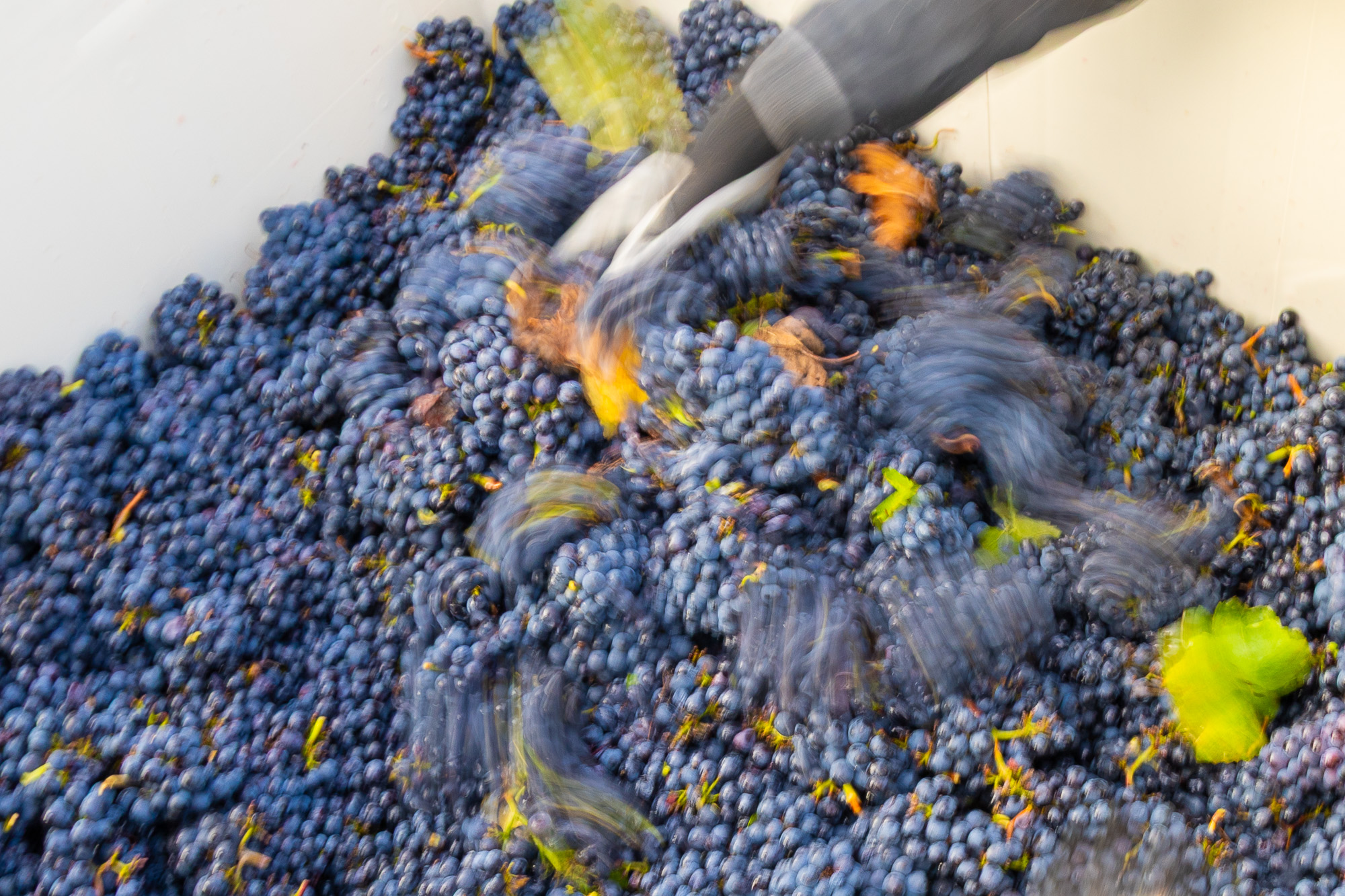
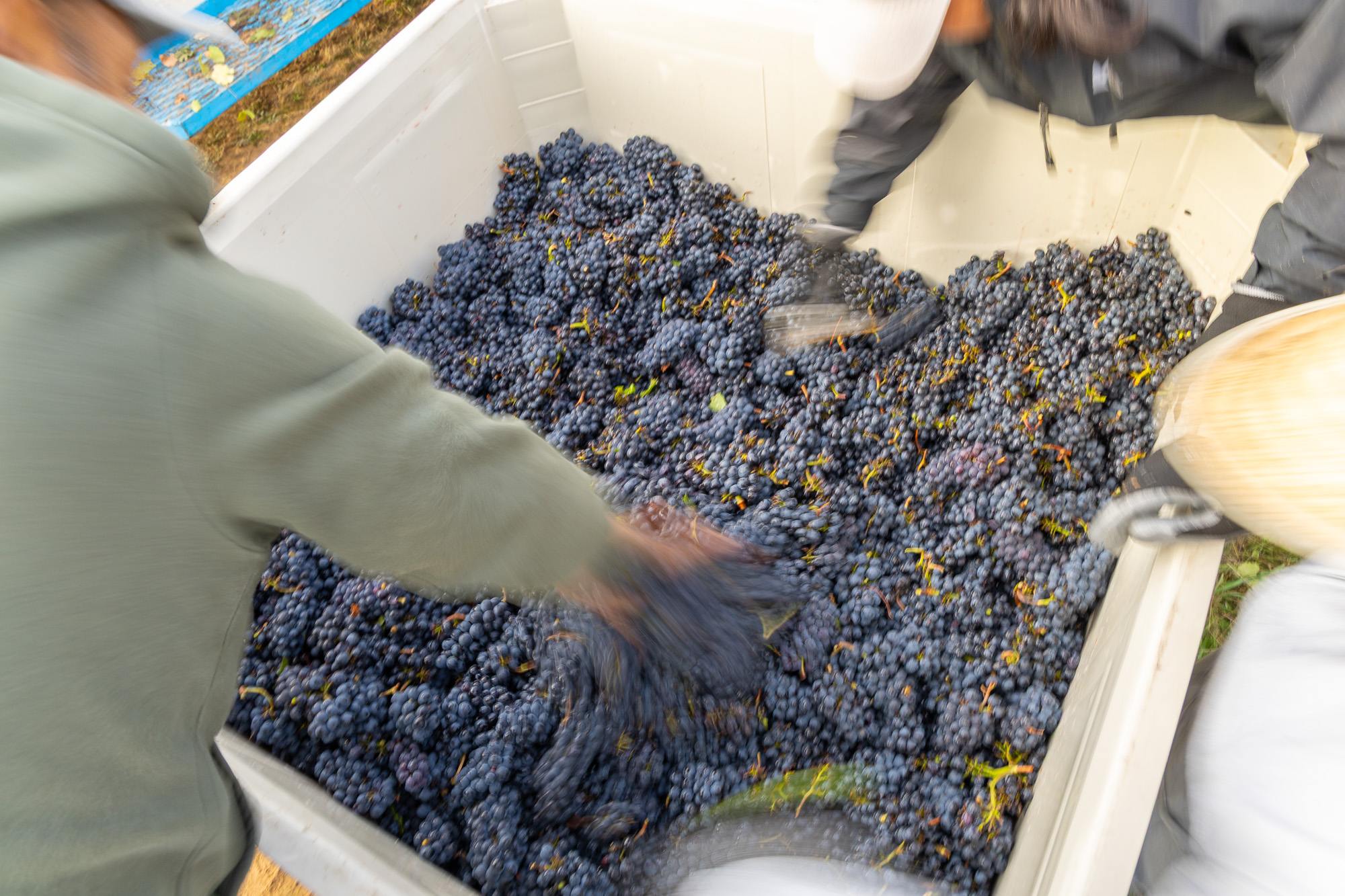
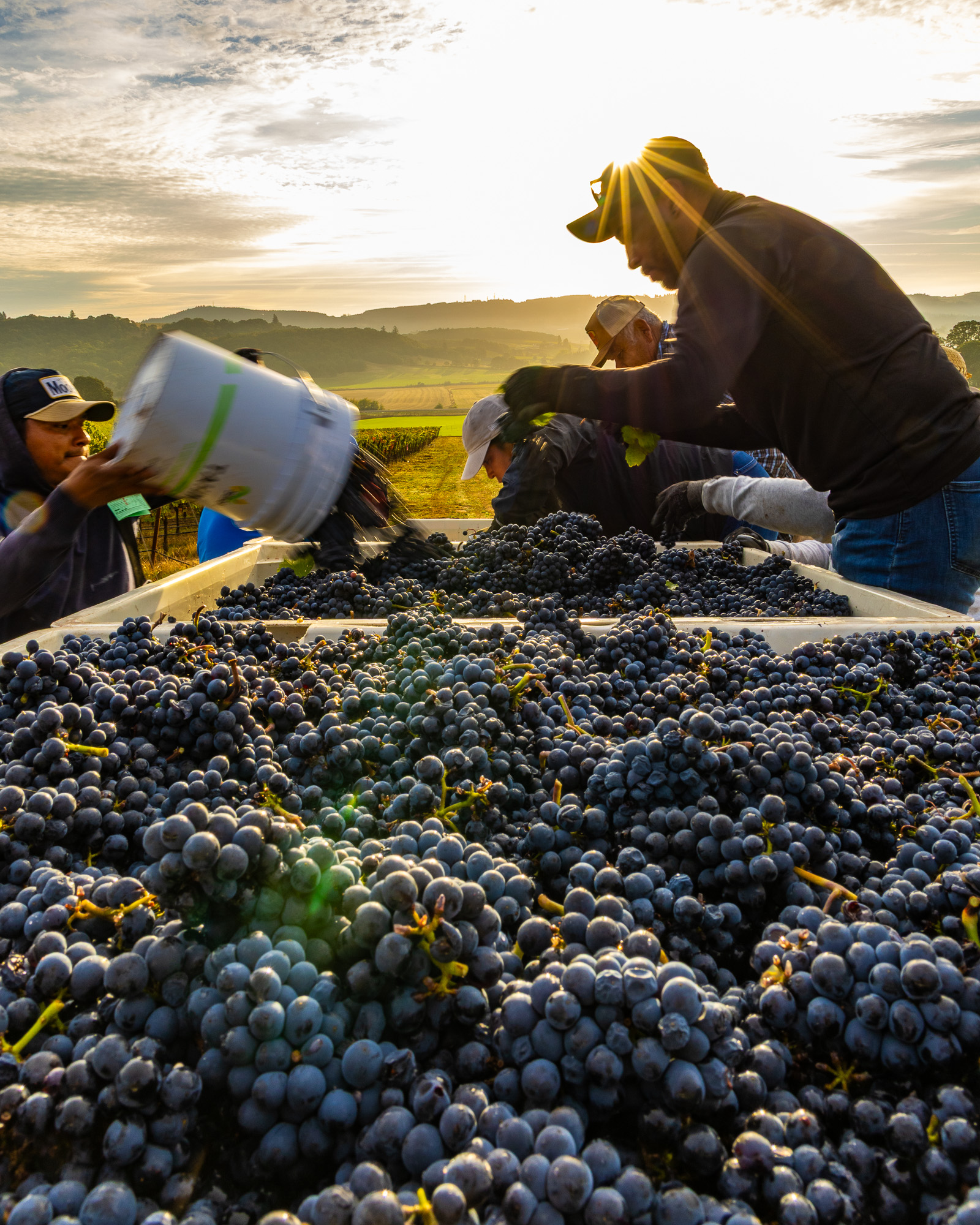
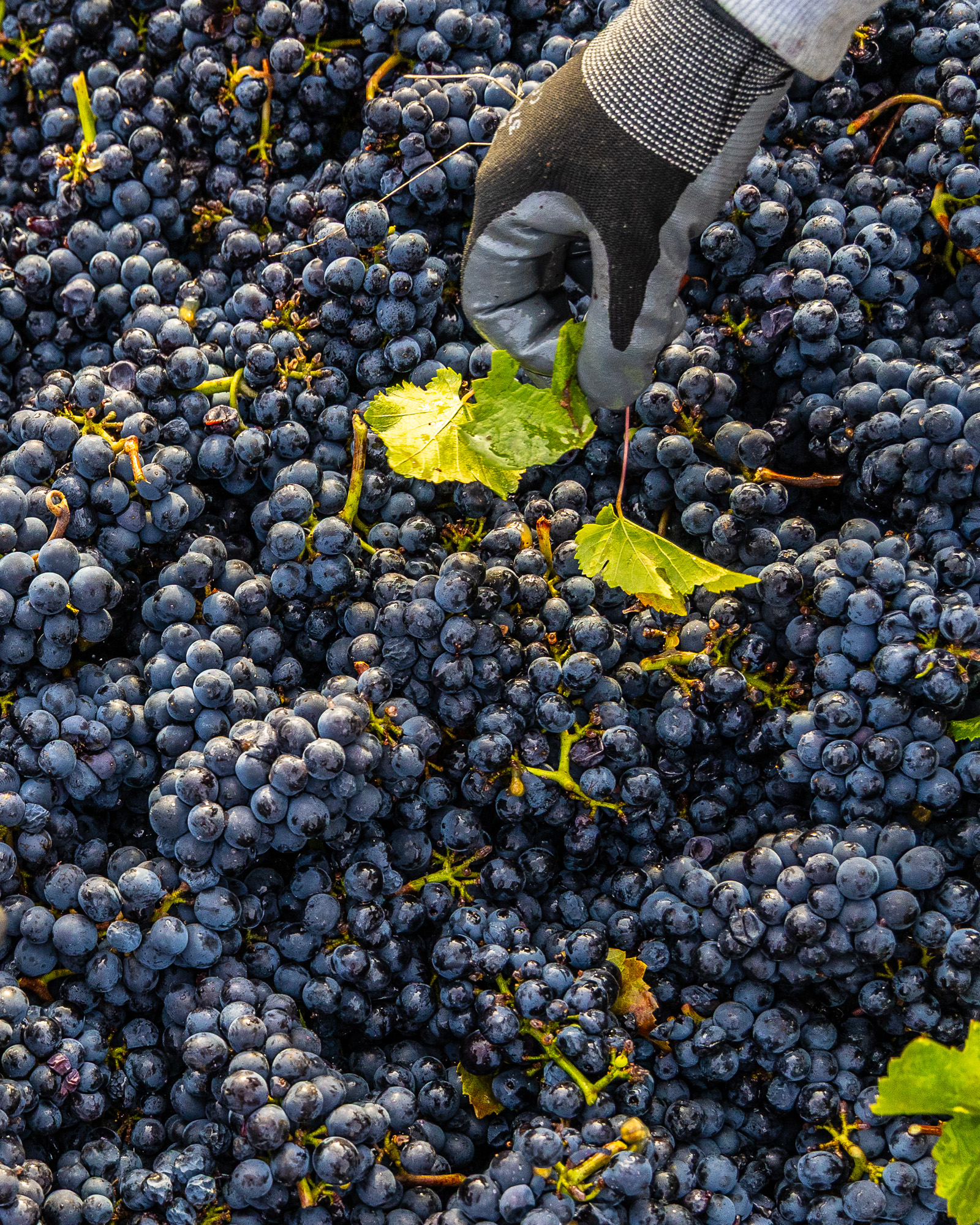
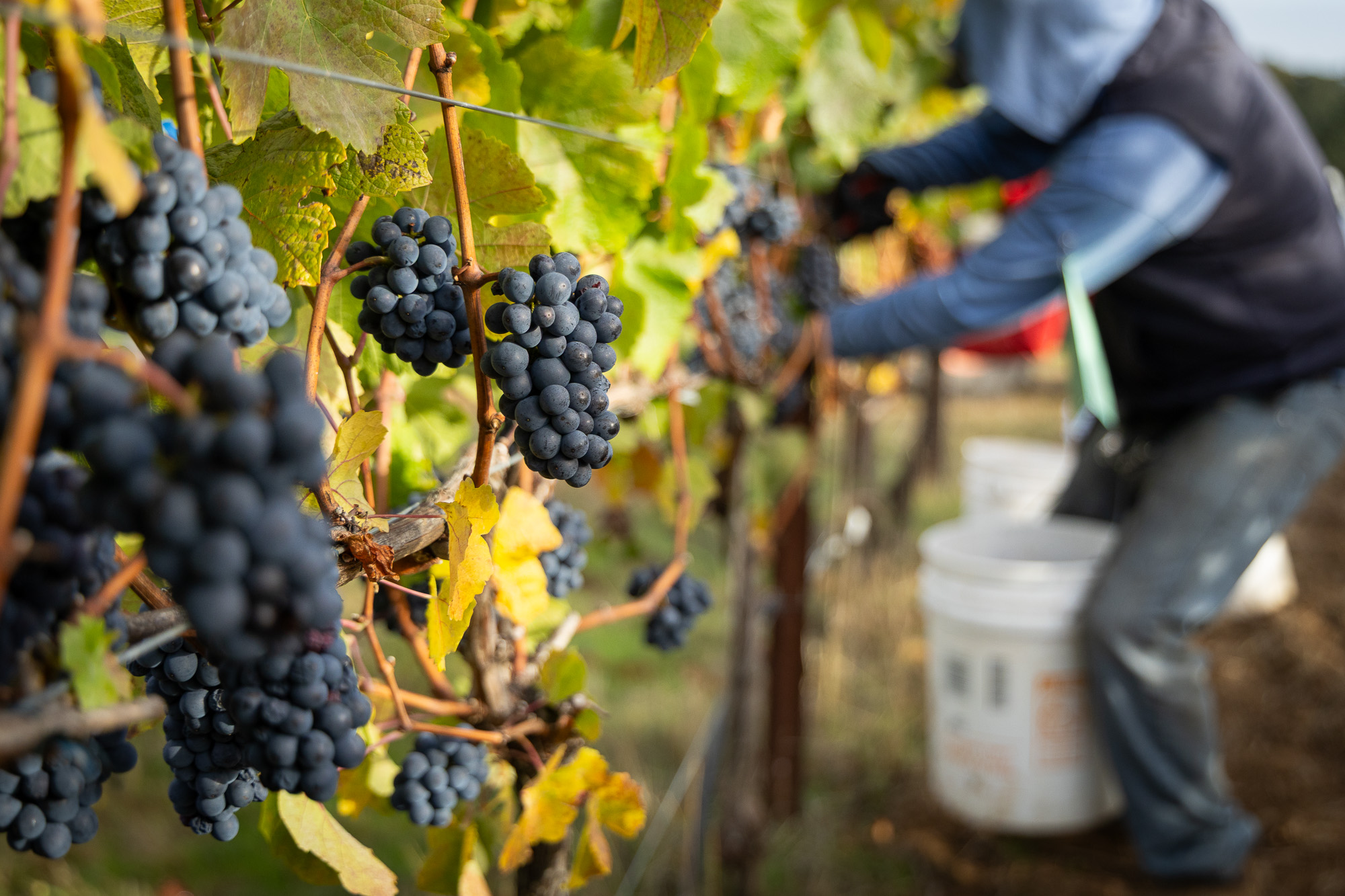
One of my favorite parts of the morning was experiencing the energy of the harvest crew. The Mexican workers were busy picking grapes, but there was also a real sense of excitement and good spirits among them. Their energy and positive moods brought so much life to the vineyard. Watching everyone work together, moving through the rows as the sun rose over our heads, gave me a glimpse into the human side of wine production. It was a reminder that behind every harvest is a team of people—friends, families, co-workers— whose hard work and enthusiasm help bring the wine to life.